
Universal Patent Filing Puts Radar on the Ride Vehicle to Catch a Guest Standing Up Before They Climb Out
Stand up on a Universal ride in the future and a radar beam might notice before the ride operator does. That is the idea behind a patent application from Universal City Studios LLC that the U.S. Patent and Trademark Office published on Thursday, October 15.
The filing, titled "System and Method for Detecting Guests in Restricted Areas," describes a radar unit mounted on the ride vehicle itself. Its beam is pointed at the space where riders are not supposed to be. If a guest breaks into that space, the system can step in.
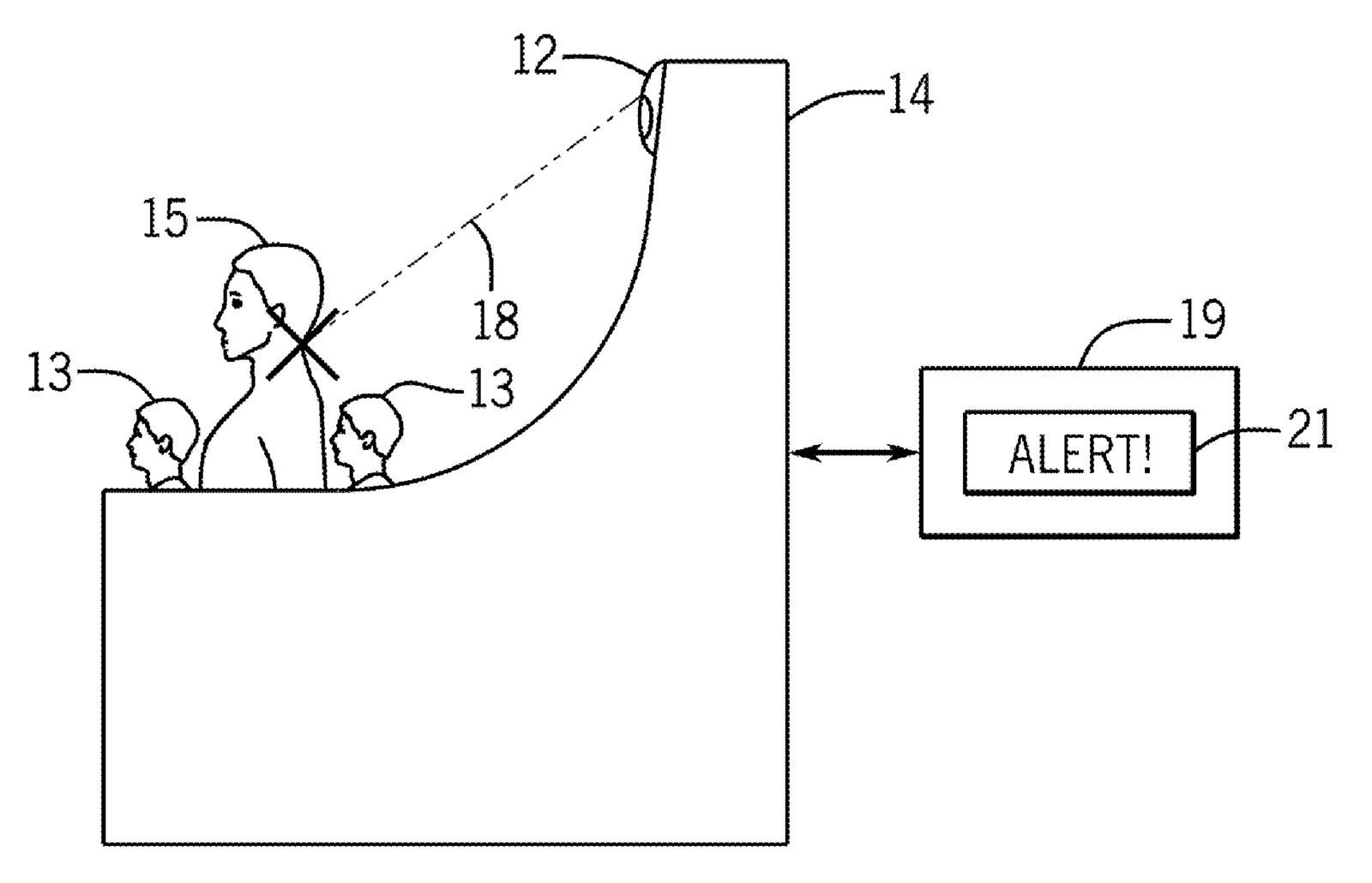
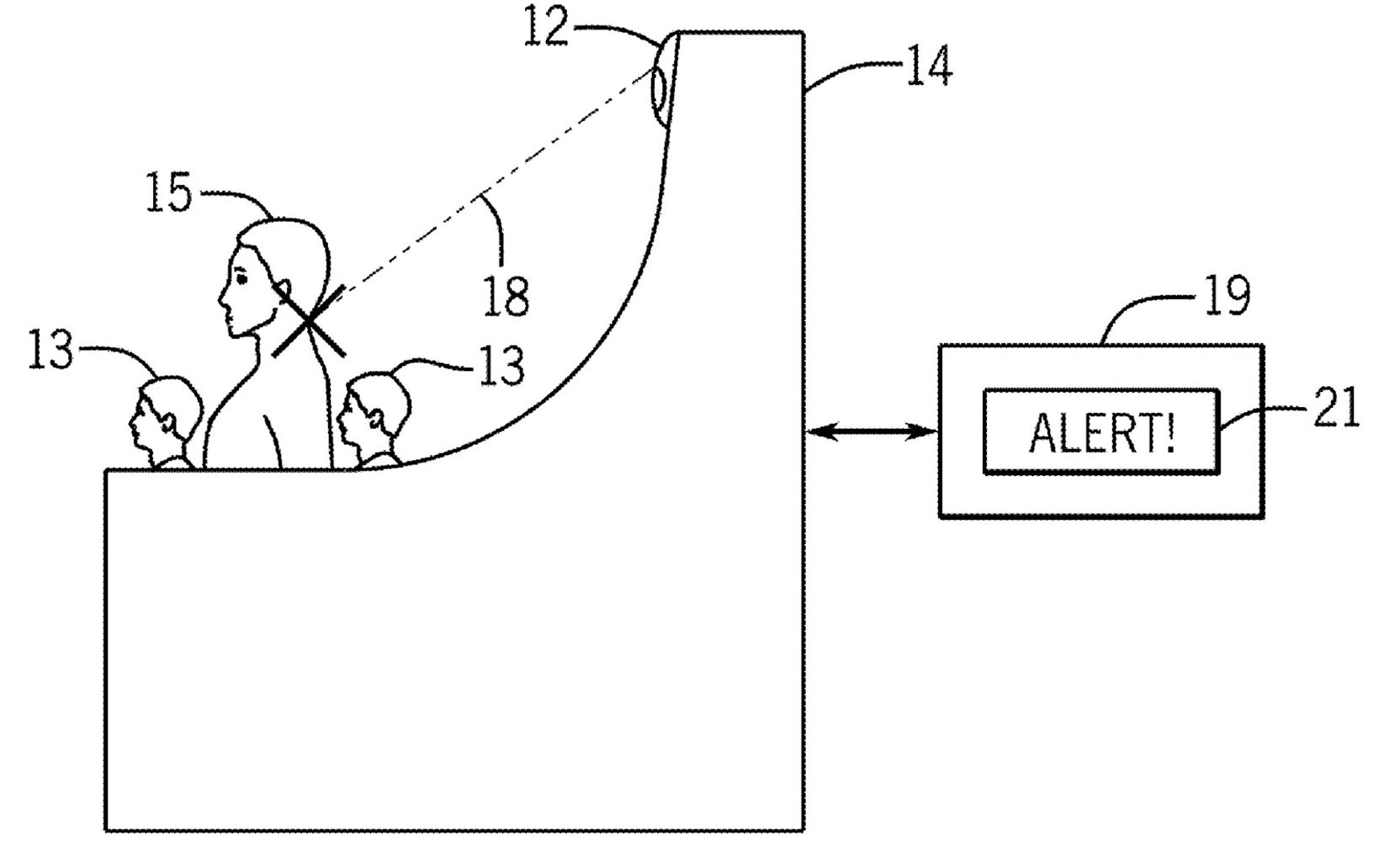
The front-page drawing: a radar unit on the high seat back aims at a rider who has stood up, and the system raises an alert. Image: USPTO / Universal City Studios LLC
What the radar is watching
According to the abstract, the guest detection system "may include a computing system, a ride vehicle, and at least one radar device or system." All or part of the radar can be attached to the vehicle, and it is positioned so that its field covers "a restricted area where guests are not permitted to be during operation of the ride vehicle and/or attraction."
Theme Park Insider, which reported the filing the day it was published, highlighted a version with two radars on the vehicle, in which "the computing system is programmed to detect whether there is a breach in at least the first radar field or the second radar field and adjust an operation of the ride vehicle when the breach is detected."
The drawing on the front page makes the point plainly. Two riders stay seated, one stands, and the beam from the seat back lands on the one who stood up. The application describes setting that beam roughly a foot above the average height of the seated guests, so it is crossed "only by a guest who is not properly in their seat."
Why Universal wants it
Parks already guard restricted areas with intrusion mats, infrared beams and camera monitoring, as Theme Park Insider notes. Universal's application looks at the systems used to check whether a guest is seated or has left the vehicle, and says they can be "expensive, complicated to configure and operate, and ineffective against determined guests." It adds that these systems "often do not provide sufficient early detection or warning, potentially resulting in the guest disembarking from the ride vehicle before the systems can take action to stop the ride vehicle or otherwise protect the guest's safety."
What would be useful instead, in its own words, is "an inexpensive and simple system and a method which can detect if a guest is attempting to engage in unsafe activities or disembark a ride vehicle before the guest does so."
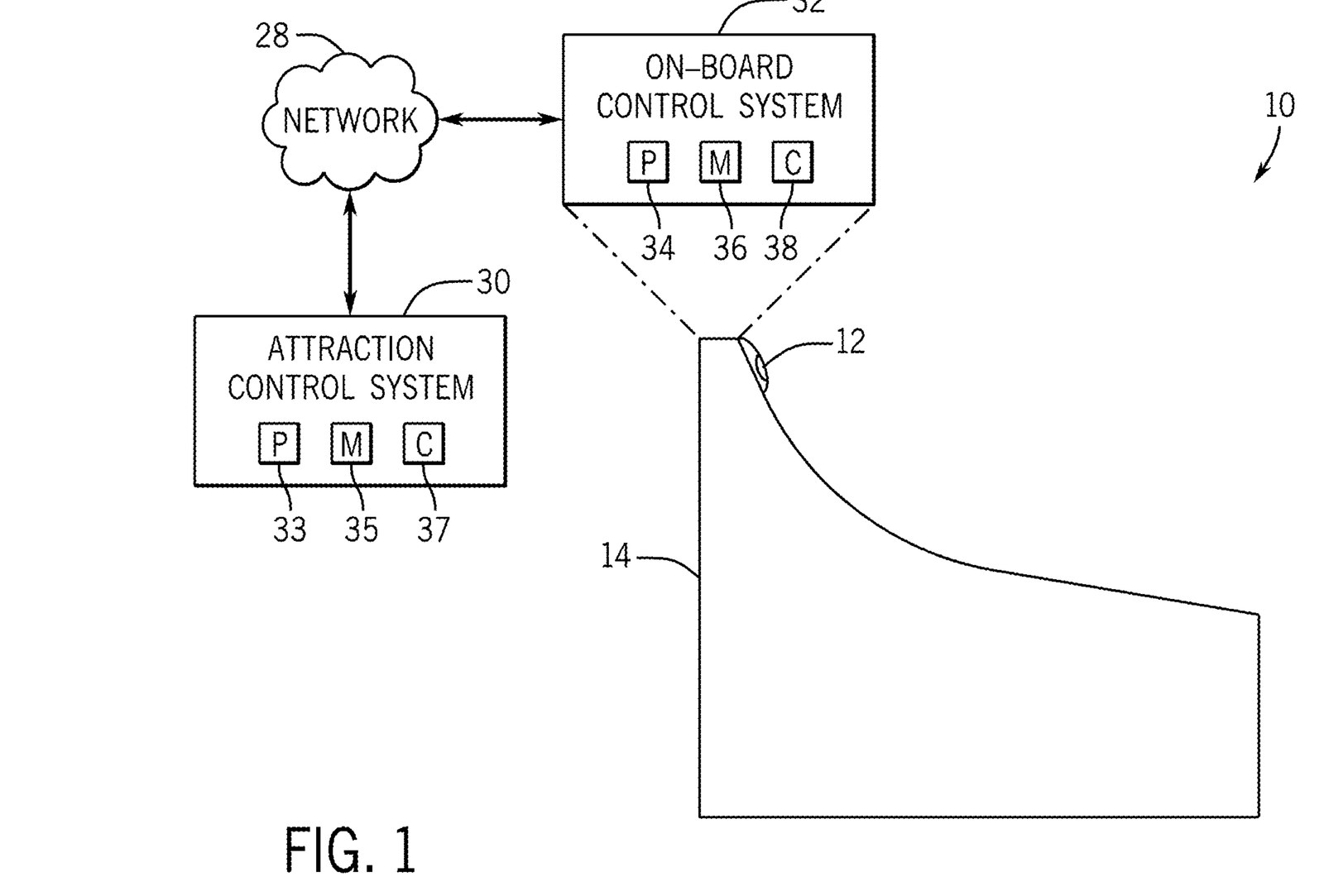
Figure 1: the seat-mounted radar feeds an on-board control system, which talks over a network to the attraction's control system. Image: USPTO / Universal City Studios LLC
A hand out, a hat, a second radar
The application goes well beyond one standing rider. Some of the variations it describes:
- Reach for the scenery: radar on the side of the vehicle watches an "exit" plane along its walls. A guest can breach it "if the guest 16 sticks a hand out of the ride vehicle 14 to touch a set piece of the attraction."
- Two radars, one backup: a vehicle can carry two radars aimed at different heights, so the second "may act as a failsafe if the first radar 20 is inoperable."
- No walls at all: on a ride with just seats and restraints, radar under each seat could watch a plane about a foot below where riders' feet dangle, which a guest would cross by leaving the seat.
- Not every blip counts: the system can be set to ignore small objects "such as bugs, hats, balloons," and anything that crosses the field only briefly. In the application's own example, it "may ignore a hat flying off the ride vehicle."
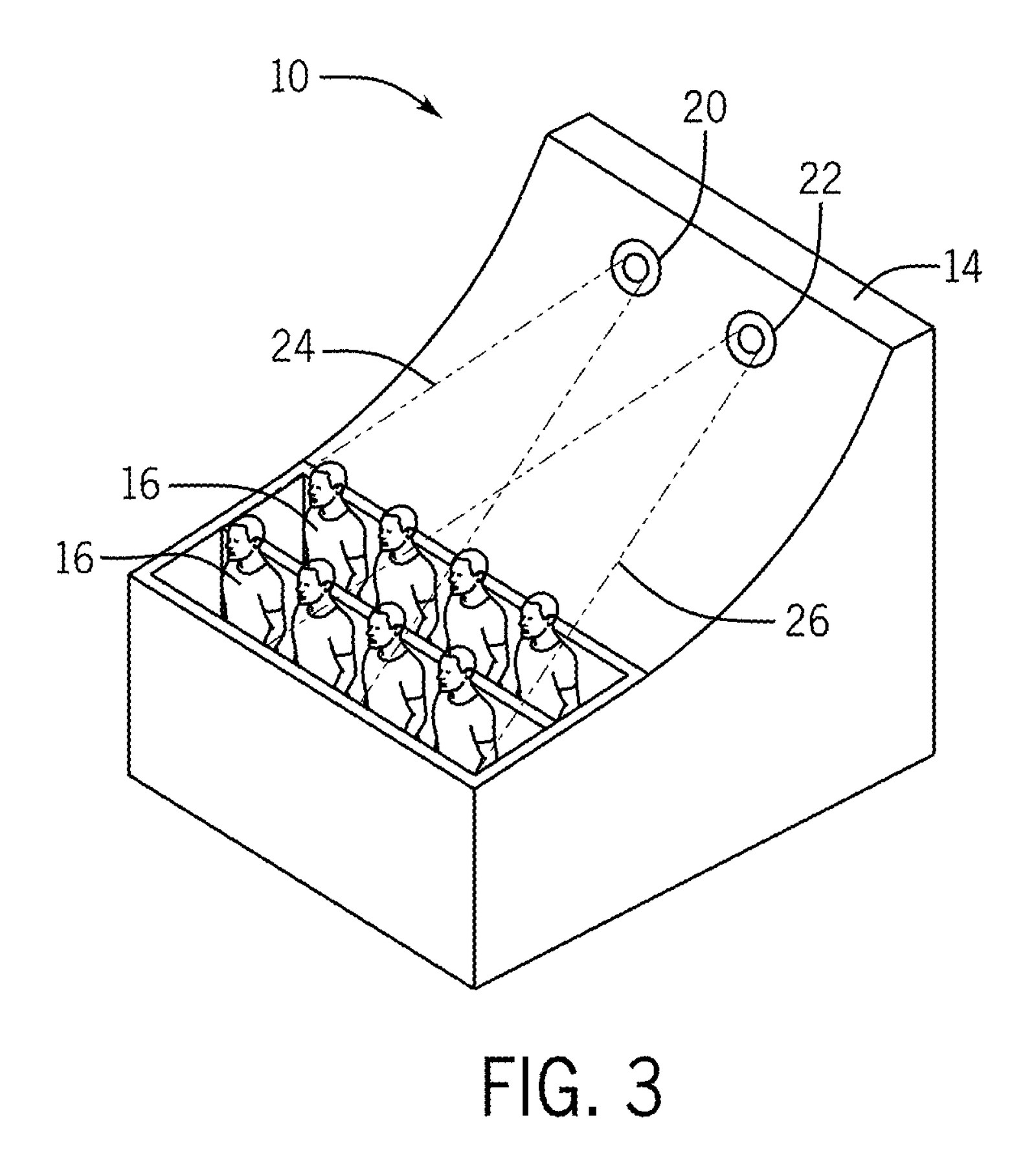
Figure 3: two radars on the back wall, which the application says can watch different heights or overlap. Image: USPTO / Universal City Studios LLC
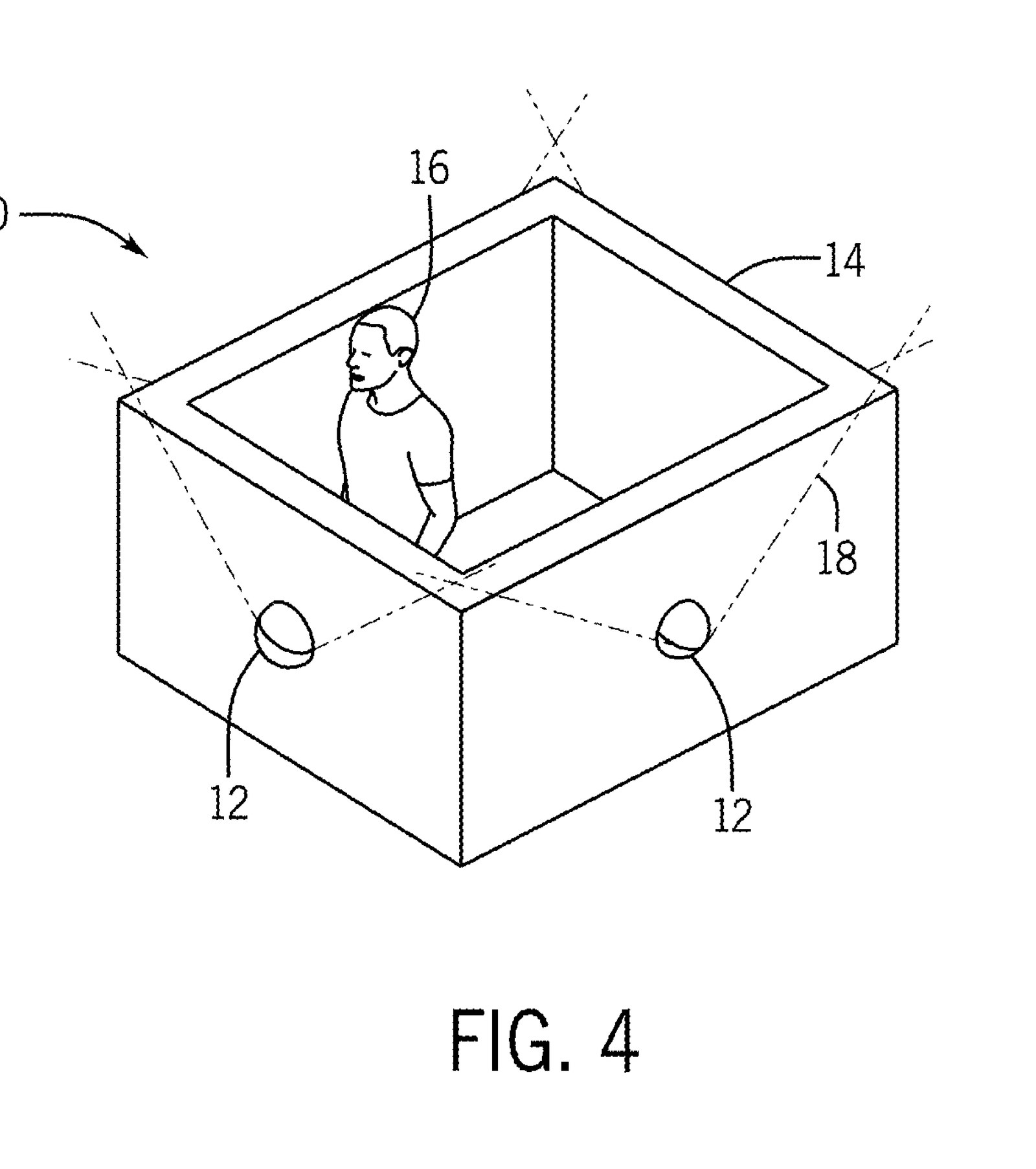
Figure 4: radar on the side of the vehicle, watching for anything that crosses over the walls. Image: USPTO / Universal City Studios LLC
What happens when it trips
When the field is breached, the system can put an alert on a user interface for attraction staff, as text, an audible alarm and/or a video feed of the vehicle. The application describes a button staff could press to relay a message telling guests to remain seated, and it says staff could slow the vehicle or stop the attraction from that same interface. It also describes the system adjusting the ride automatically.
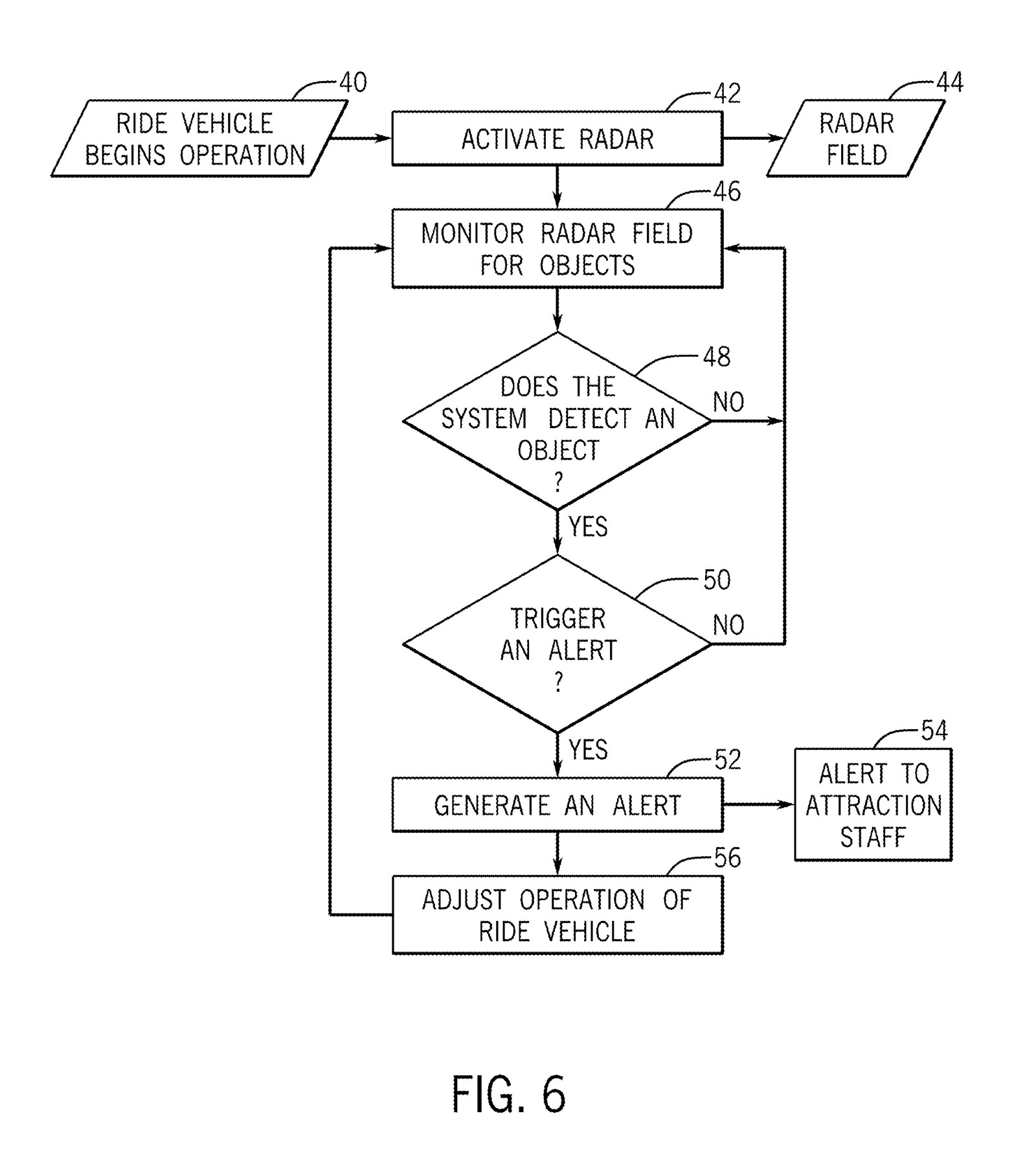
Figure 6: the loop from activating the radar to alerting staff and adjusting the ride. Image: USPTO / Universal City Studios LLC
Who filed it, and when
- Publication: US 2026/0319507 A1, published October 15, 2026.
- Applicant: Universal City Studios LLC.
- Inventors: James Joseph Childs, Jr., of Winter Garden, and Kevin Weekes, of Ocoee, both in the Orlando area.
- Filed: February 2, 2026, building on a provisional application filed February 7, 2025.
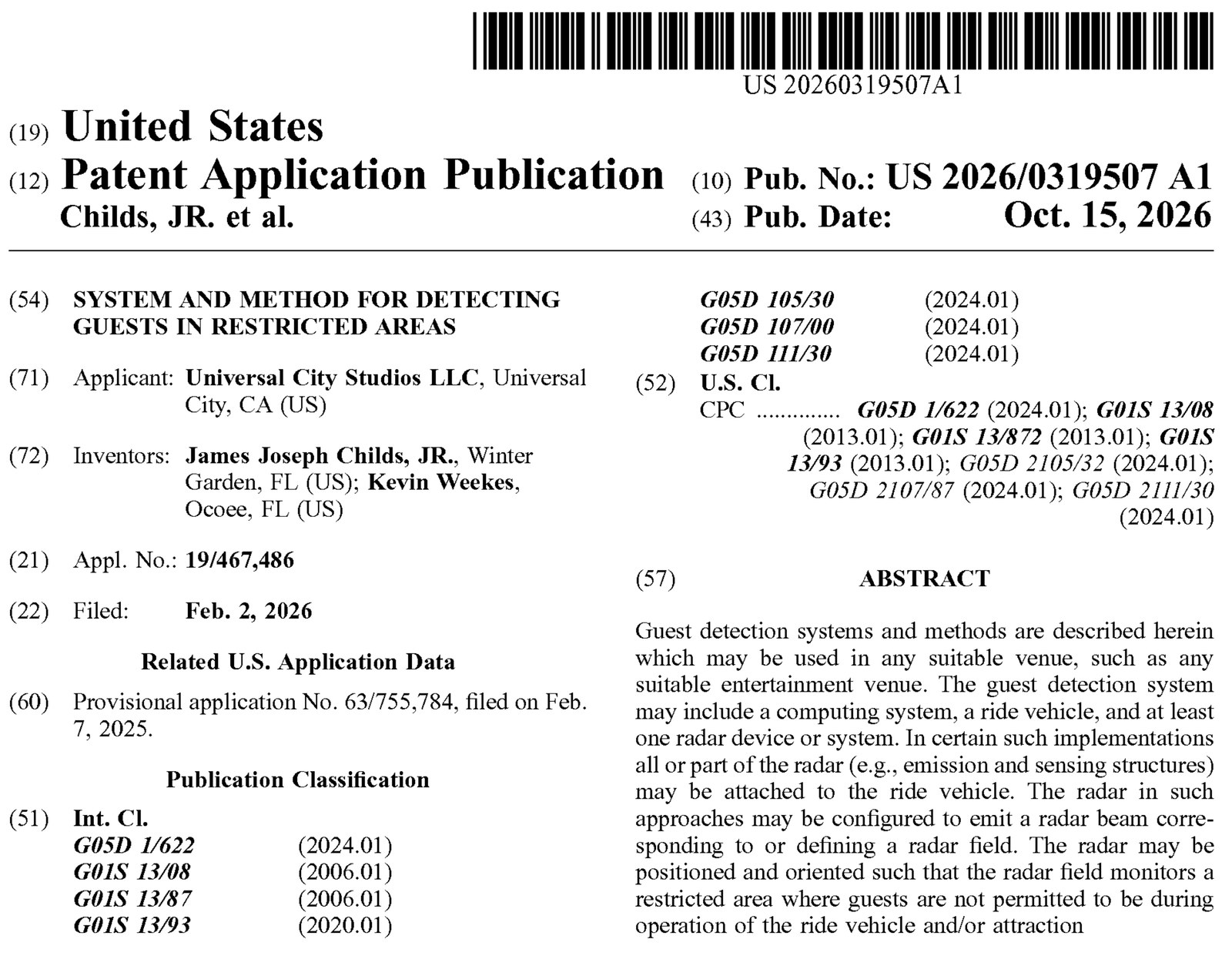
The application's front page. Image: USPTO / Universal City Studios LLC
The application does not name any ride or park, and a published application is not a granted patent or a promise that the system will be built. It is a look at the kind of safety tech Universal is working on, alongside other recent filings such as the color-coded lights that would guide guests to their ride lockers.
Would a radar watching your seat make you feel safer, or would you worry about a false alarm stopping your ride?
Sources
- U.S. Patent and Trademark Office, US 2026/0319507 A1, "System and Method for Detecting Guests in Restricted Areas" (PDF) (published October 15, 2026)
- Theme Park Insider, "Universal details new radar system for guest safety" (October 15, 2026)
- Parks Magic, Universal's ride locker guidance lights patent filing (October 3, 2026)
Image credits: USPTO / Universal City Studios LLC (all images, from the published application).