Disney Filed for a Ride Warning System That Tells You Only About the Scary Bits You Personally Flagged
The warning sign outside a Disney ride has a built in problem, and the filing opens by naming it: listing every possible effect is not feasible, a list long enough to be complete becomes impractical to read, and the sight of it can deter people from the attraction altogether. It lists flashing lights and sudden drops and loud noises in one block of small type, and you stand there trying to work out which of those apply to the person in your party who actually needs to know.
A patent application Disney Enterprises filed in February 2025, published by the USPTO on Thursday, August 20, proposes inverting that. Instead of a single sign written to cover everyone, you tell the system in advance what you want to avoid, and it speaks up only about the items you flagged. The filing puts that alert anywhere from mid ride to before you have even set off for the attraction.
What the filing actually claims
The application is titled "Personalized Notification of Attractions Including User Preferences or Aversions," application number 19/054432, assigned to Disney Enterprises, Inc. Its abstract describes "a user preferences database including at least one of an aversion of a first user or a preference of the first user."
The core loop in claim 1 is short. The system is to "receive, from an attraction providing a user experience, data describing a characteristic of the user experience," compare that characteristic against your stored aversions and preferences, determine that it matches, and then alert you. In other words the ride broadcasts what it is about to do, and your profile decides whether that is your problem.
The filing keeps "characteristic" deliberately wide. One claim defines it as "at least one of a visual effect, a sound, an odor, a flavor, a motion, or a tactile effect." Another covers the physical side: "a velocity, an acceleration, a change in altitude, a roll, a pitch, or a yaw of a vehicle used by the attraction while providing the user experience."
The specification runs the examples far wider than the claims do. It reaches from snakes, spiders and blood and gore to high frequency light flashes, from chemical solvents and sewage to the spiciness or saltiness of a tasting menu, from being sprayed with hot or cold air to vibrations, and it notes that sometimes the problem is not a particular sound at all but its volume. Attractions Magazine notes the filing scores individual moments and not just the ride as a whole, on a scale where, in its summary, "a single motionless spider might warrant a 1 or 2 on a 10-point scale, while a swarm of aggressively moving spiders could rate an 8 or higher."
It does not stop at warning you
Two of the dependent claims are the interesting ones. In the first, the system anticipates the moment while you are mid ride, then obtains "substitute content for the event, the substitute content omitting or decreasing the characteristic corresponding to the aversion," and plays you that instead.
In the second, it skips the workaround and goes to the source, transmitting "modification data requesting one of an increase, a decrease, or an omission of the characteristic while the first user is having the user experience in the attraction." Note the word increase. The claim covers dialing an effect up as much as down, and the specification's worked example is a guest who finds acceleration enjoyable having the g-force raised during a flight or space travel simulation individual to that guest, within limits it calls "predetermined to be safe."
There is also a proximity claim that has nothing to do with being on the ride at all: the system takes your location data, works out "whether the first user is within a predetermined distance of the attraction," and notifies you when you are. That is the version that would reach you in the queue, or walking past.
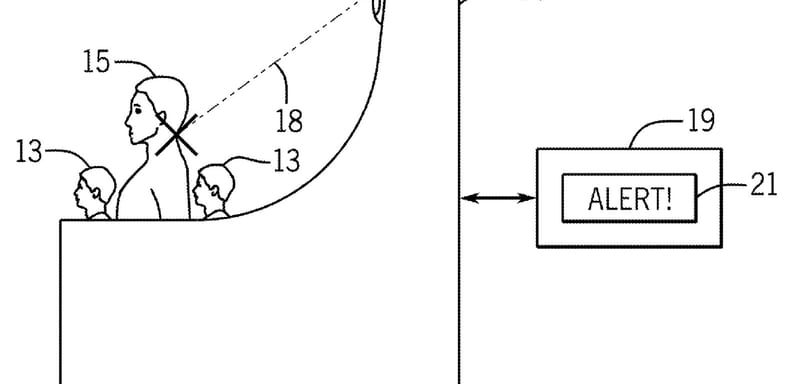
The system diagram
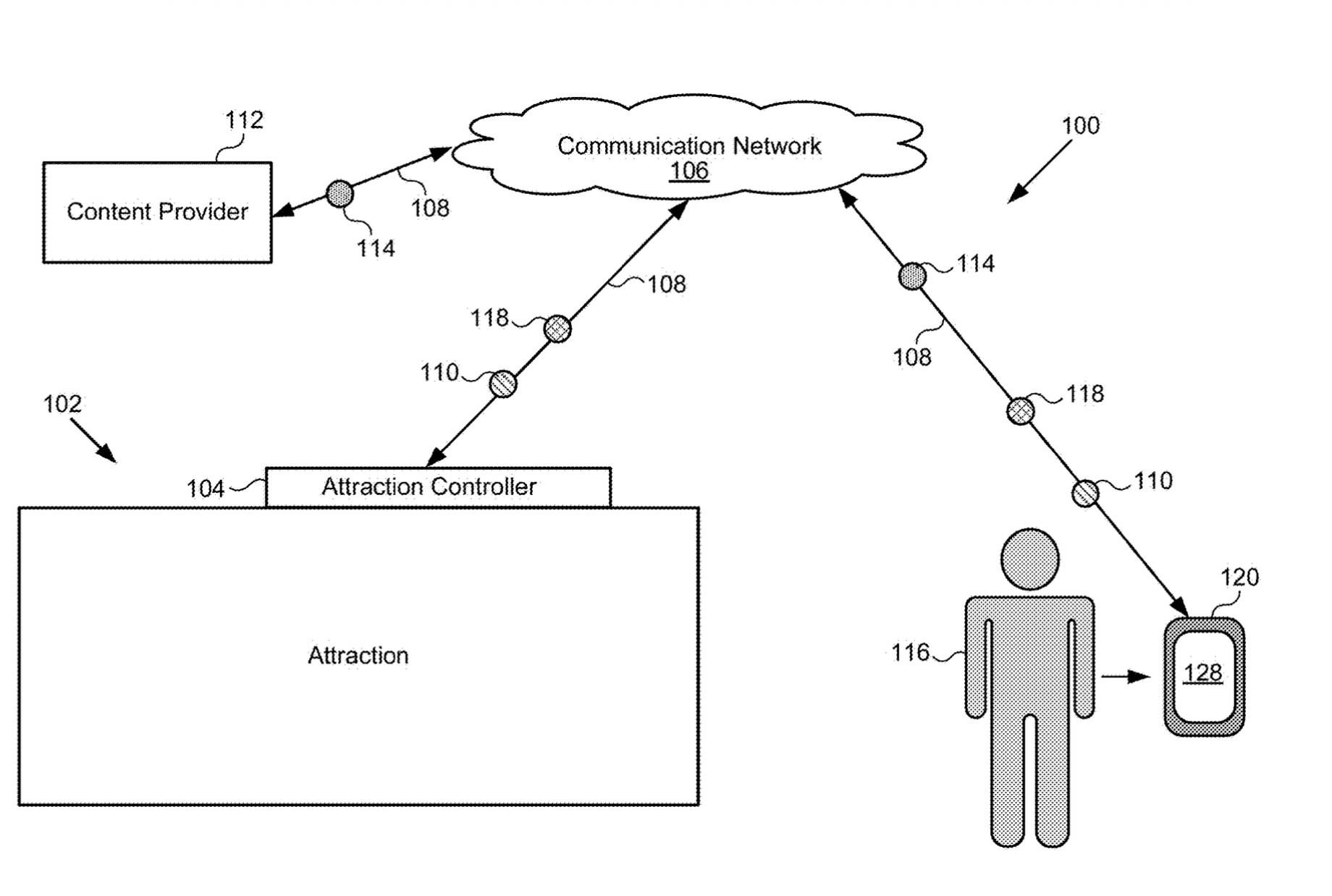
There is nothing exotic in the architecture: a content provider, the attraction and its controller, a network, and a device in your hand. The one thing it does need from the ride is the data feed itself, plus, for the claims that dial an effect up or down, a controller willing to act on the request. The specification describes the alert reaching you visually, audibly or through a haptic effect, so a watch buzz a beat before the drop sits squarely inside what the filing describes. The claims themselves say only that the user is alerted or warned.
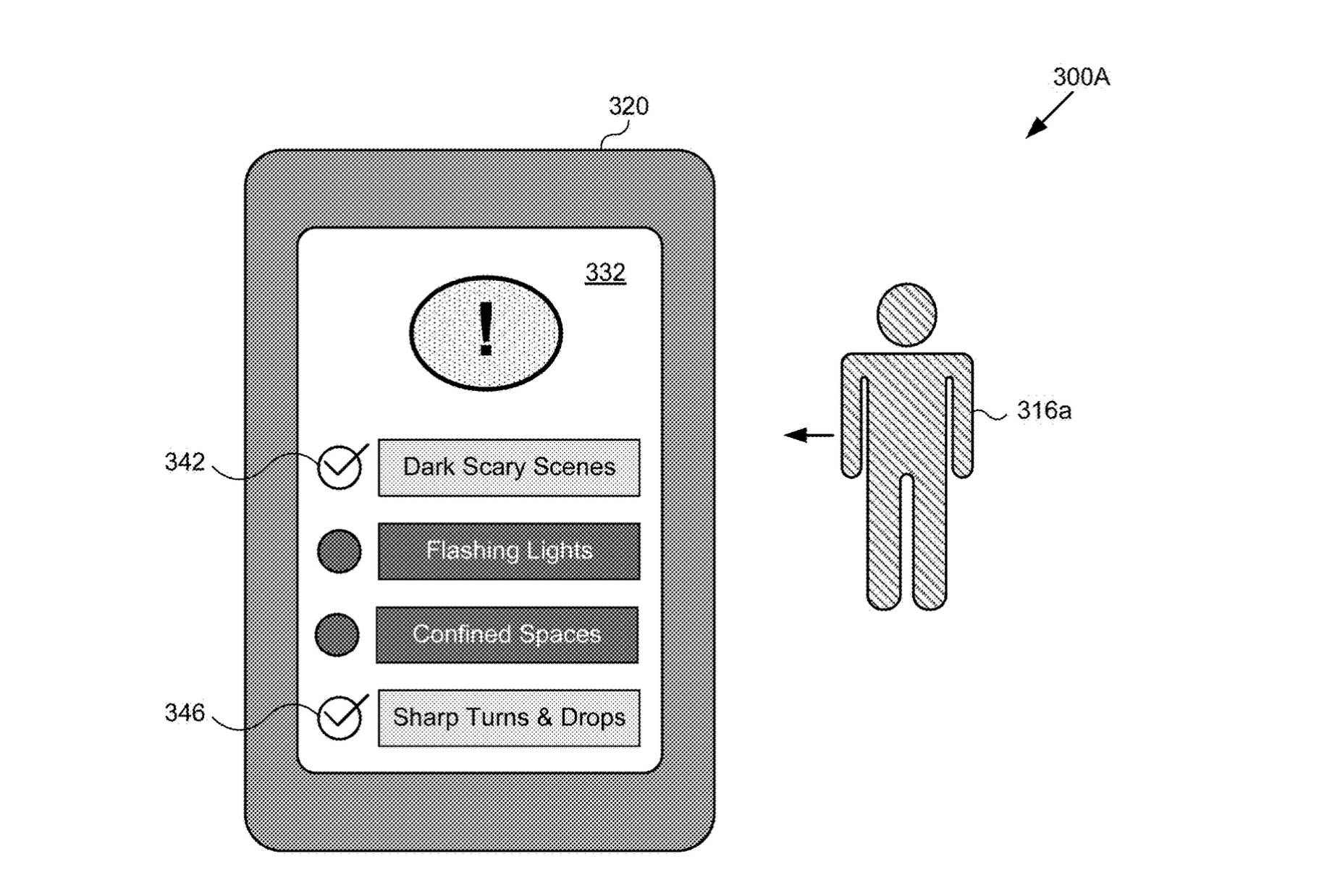
One case Attractions Magazine picks out of the specification, set out in the filing's Figure 3B, involves a parent whose child has, in the filing's words, "autism or other sensory needs." She ticks Dark Scary Scenes, Confined Spaces and Sharp Turns and Drops, then asks for substitute content in their place. The filing is blunt that it will not always exist: substitutes may typically be available for visual and audio effects, but not for odors, flavors, tactile effects, confined spaces or motion, and in those cases the guest is simply warned. There is a lighter one too, on water rides: telling you where to position yourself to get least wet, or most.
The usual caution, which matters here
This is a patent application, not an announcement. Both outlets that covered the filing make the same point, that plenty of Disney patents never become anything. WDWMagic adds that Disney has said nothing publicly about bringing this one to My Disney Experience. The filing does not name an app, and it does not tie itself to any attraction in development. It was filed in February 2025 and only became public this week because that is when the USPTO published it.
What makes it worth reading anyway is that the warning half of it is unusually cheap to imagine. It needs a preferences screen, a data feed from the ride, and a phone you already have in your pocket, and the filing is explicit that the phone could equally be a tablet, a smartwatch or a headset. The half that changes the ride is a heavier lift, because it needs an attraction controller willing to act on a per guest request.
It is also not the only Disney filing the USPTO put out on August 20. A separate application, "Opportunistic Projection Onto Dynamic Light Reflective Material," published the same day and covers projecting animations onto drifting smoke, fog and the residue left after fireworks. Different filing, different subject, no connection to this one.
Sources
- US Patent Application 20260245439, "Personalized Notification of Attractions Including User Preferences or Aversions," Disney Enterprises, Inc., published August 20, 2026
- WDWMagic, "Disney Wants to Warn You Before the Scary Part Hits"
- Attractions Magazine, "Disney patent could let attractions adapt to what guests want, or want to avoid"
- WDWMagic, "Disney's Latest Patent Could Bring Floating Projection Screens to the Parks"
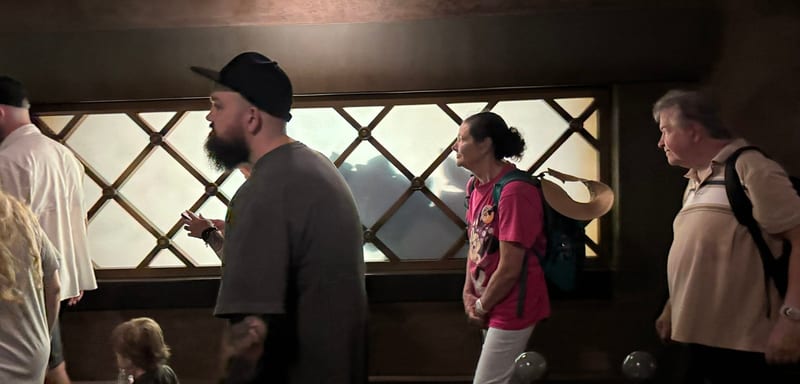
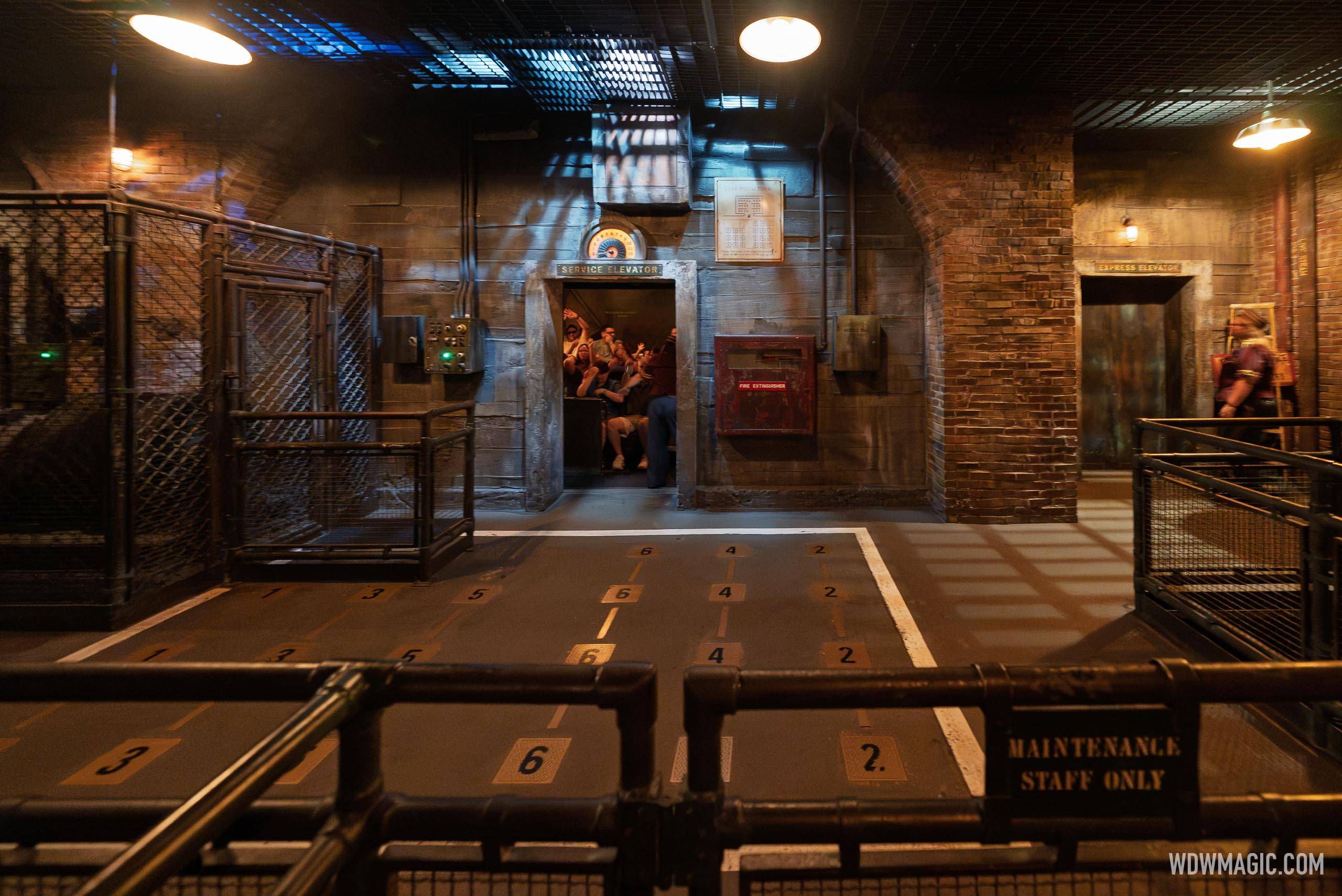
Image credits: Patent figures from US Patent Application 20260245439, Disney Enterprises, Inc., via USPTO, as reproduced by WDWMagic. Tower of Terror photography by WDWMagic.
Mentioned in this story
Check out our guides for more on each place in this story: