Universal Patent Filing Imagines an AI Ride Character That Knows Your Name, Your Family, and That You Are Afraid of Clowns
Picture a dark ride where the clown on the screen in front of you says your name. Then imagine it already knows you are afraid of clowns.
That scenario is pieced together from examples in a Universal patent application the U.S. Patent and Trademark Office published on Thursday, October 22. Titled "Ride Vehicle Artificial Intelligence Entity Systems and Methods," it describes ride vehicles that can carry their own AI characters, personalities with moods and preferences, which tailor the ride's effects to whoever is sitting in it.
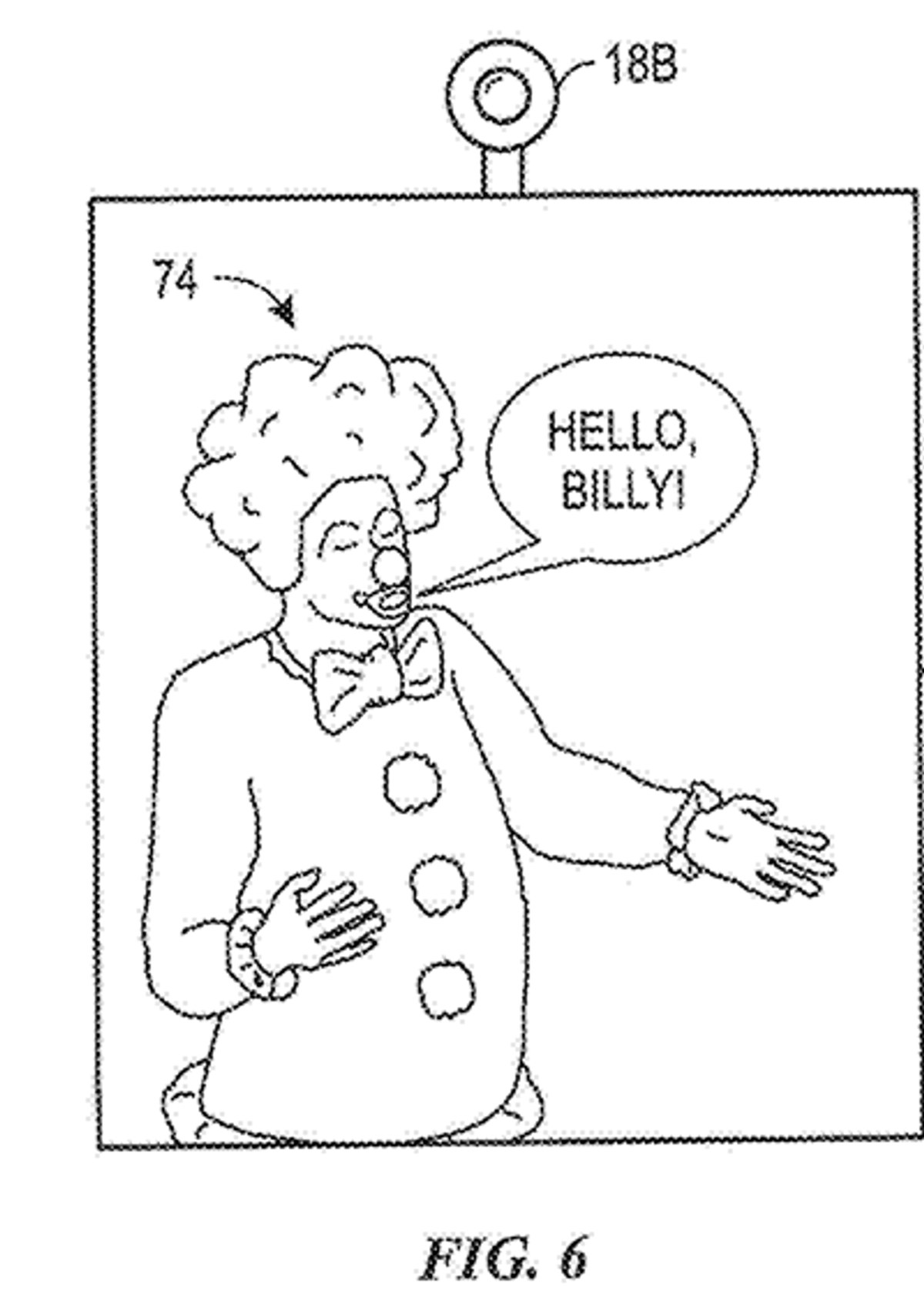
FIG. 6 of the application: a clown on a ride vehicle screen, with a camera above it, greeting a rider by name. Image: Universal City Studios LLC / USPTO
How the ride would know who you are
The application lists a stack of ways the park could spot and identify guests: proximity sensors, cameras, wearable RFID tags, readers and weight sensors on the ride track, and audio sensors. The cameras "may perform facial recognition and/or body recognition," and a rider's face could be matched to an image stored for that guest or one pulled from a third-party app, with the filing's example being "a guest profile picture on a social media application."
From there it gets personal. If ticket data suggests you came with two family members, the ride vehicle may look up their names, using "family member names tagged on a social media application" as the example, and confirm who is sitting with you by matching video to social media images. Then it may address everyone by name.
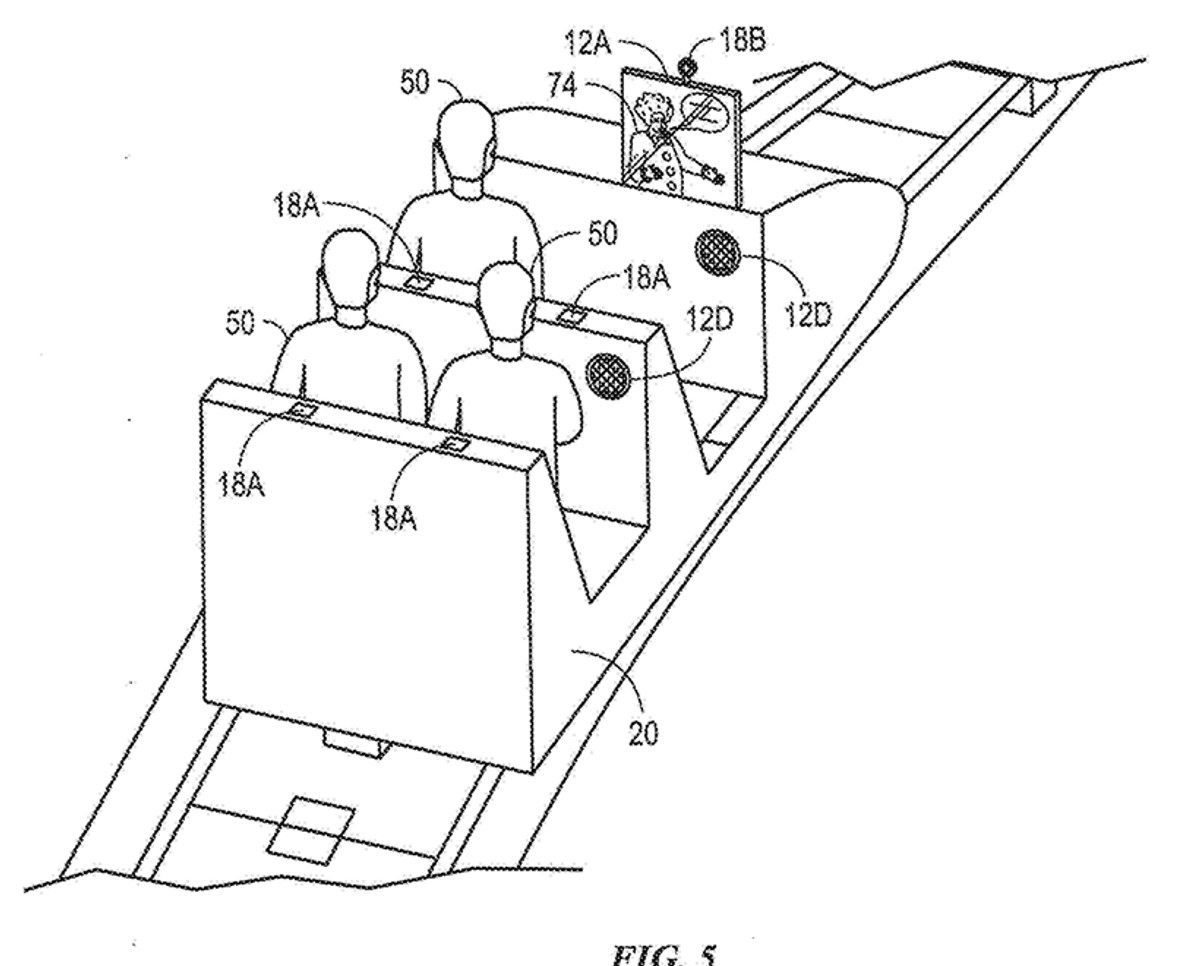
FIG. 5: riders in a vehicle with a screen, camera and speakers on board. Image: Universal City Studios LLC / USPTO
The clown example, in Universal's words
The filing describes a guest whose data shows they fear clowns, because an audio sensor "at another attraction" caught them saying so. On a tunnel ride, an animated figure in the park might then call out to that guest as their vehicle approaches and, in the filing's words, "ask about a game that the particular guest 50 played earlier at the amusement park," or "ask about a family member by name." It may also "make faces or gestures that scare the particular guest 50."
Other examples in the same document:
- The ride vehicle's AI system could have a lighting system "project clown faces in the tunnel" based on the guest's data.
- The vehicle's lighting system could "project spiders if the particular guest 50 is afraid of spiders," when the guest's AI character is tied to spiders in some way.
- The sound system could play audio tied to "the particular guest's favorite attraction 14 (e.g., theme song)."
- A character a guest fears, or likes, could speak toward them "in a relatively menacing manner (or, conversely, in a friendly manner)."
Your phone, your bank app, your screen time
The most eyebrow-raising list is about outside data. The application says that, "upon guest permission," third-party apps could share data with a ride vehicle, and those apps "may include, but are not limited to, social media applications, medical applications, and/or bank applications." A guest's phone could also share, again with permission, photos and videos, its GPS location, tracking data such as steps per day and average screen time, and settings like larger text or accessibility features.
The filing does give guests a say. It says a guest "may control the data shared," and that the amount of interaction can match the amount shared, for example limiting the ride to addressing only that guest by name and not the rest of the family.
Characters with personalities, and a ghost that follows you
The AI characters themselves can be a well-known themed character or a custom one, and the application lists personality traits running from happiness and kindness to sarcasm, meanness and belligerence. A guest might pick a character to follow them through their visit.
Some characters could live on one specific ride vehicle, and the filing suggests they may "begin to develop a reputation" so that guests want to ride that particular vehicle to meet them. Others could seem to follow a guest or group from ride to ride, "(e.g., such as a ghost)."
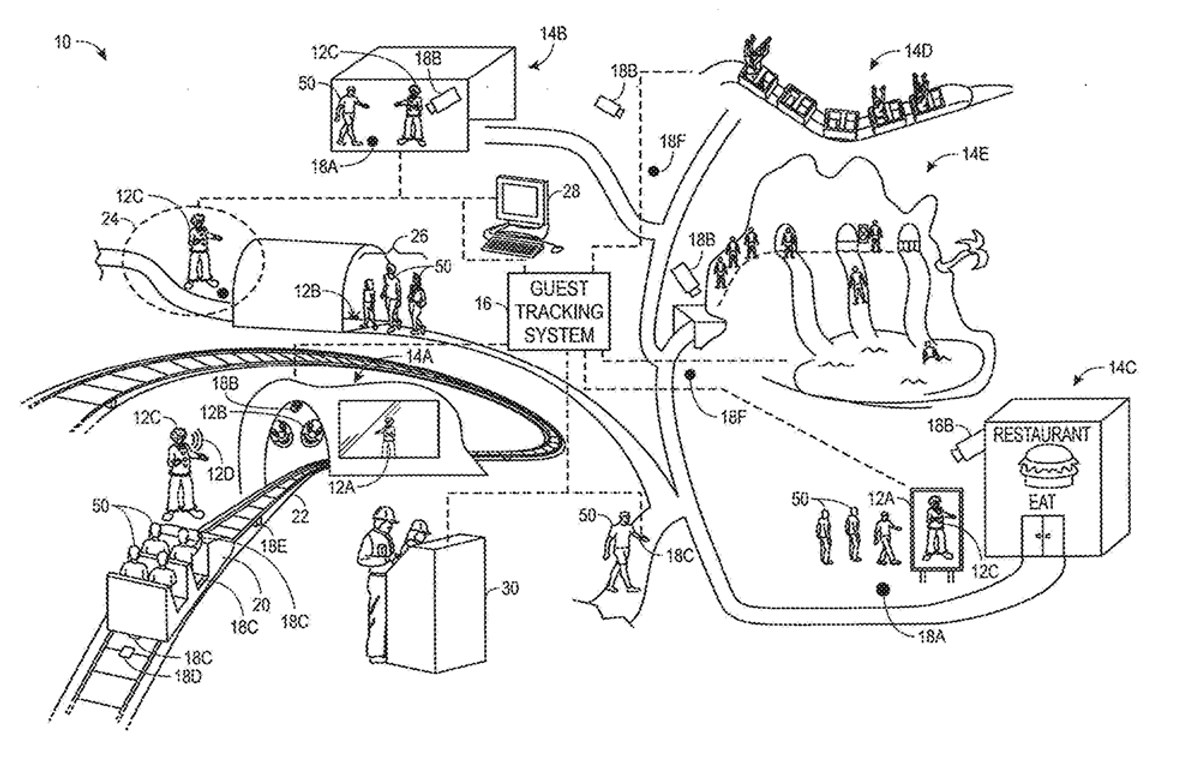
FIG. 1: the park-wide setup, with rides, a restaurant and a service desk all tied to a guest tracking system. Image: Universal City Studios LLC / USPTO
A service desk can pull the plug
A service desk, staffed by "human or virtual service agents," could manually stop the AI characters, with a button as the filing's example, if it finds problems with them. Because guests are tracked, the desk could also spot problems such as a guest who has been stuck "stationary or approximately stationary at the roller coaster zone" for too long, which may alert the desk "to resolve such issues."
Theme Park Insider, which flagged the filing on October 22, summed up the concept as "the dark ride equivalent of a 'Choose Your Adventure' book."
What this is, and what it is not
This is a patent application, not an announced attraction. It does not name a park or a ride. It is also not brand new thinking: the application is a continuation of an earlier Universal filing from May 2023 that has since been granted as U.S. Patent No. 12,551,806, and the idea traces back to a provisional application filed on May 11, 2022. The new application was filed on February 3, 2026, and lists Robert Michael Jordan and Mark James Traynor, both of Orlando, as inventors.
Plenty of patented ideas never get built. Still, it is not the only recent Universal filing about ride vehicles that keep an eye on their riders. On October 17 we covered another, a radar system for spotting a guest who stands up.
Would you let a ride read your social media for a personalized scare, or is that a hard no?
Sources
- U.S. Patent Application Publication US 2026/0325979 A1, "Ride Vehicle Artificial Intelligence Entity Systems and Methods" (published October 22, 2026)
- Theme Park Insider, "Universal invites you to experience 'Big Brother: The Ride'" (October 22, 2026)
Image credits: Universal City Studios LLC / USPTO (patent figures).