Disney Patent Application Shows a Boat Ride That Tilts So Wheelchair Riders Can Roll Aboard Without Leaving Their Chairs
Boat rides are an especially hard case for guests who use wheelchairs. A Disney patent application published Thursday tries to fix that by tipping the whole boat.
The U.S. Patent and Trademark Office published application US 2026/0272736 A1, "Rider Inclusive Transport Aide," on September 17, 2026. The applicant is Disney Enterprises, Inc., the inventor is Kristopher M. Laffin of Long Beach, California, and it was filed on March 11, 2025, as application 19/076,060. WDWMagic reported it on Thursday morning.
The goal, in the filing's own words, is to allow riders "using a wheelchair, scooter, or other mobility aide to drive their wheelchair or scooter onto the vehicle without needing to transfer out of the wheelchair or scooter."
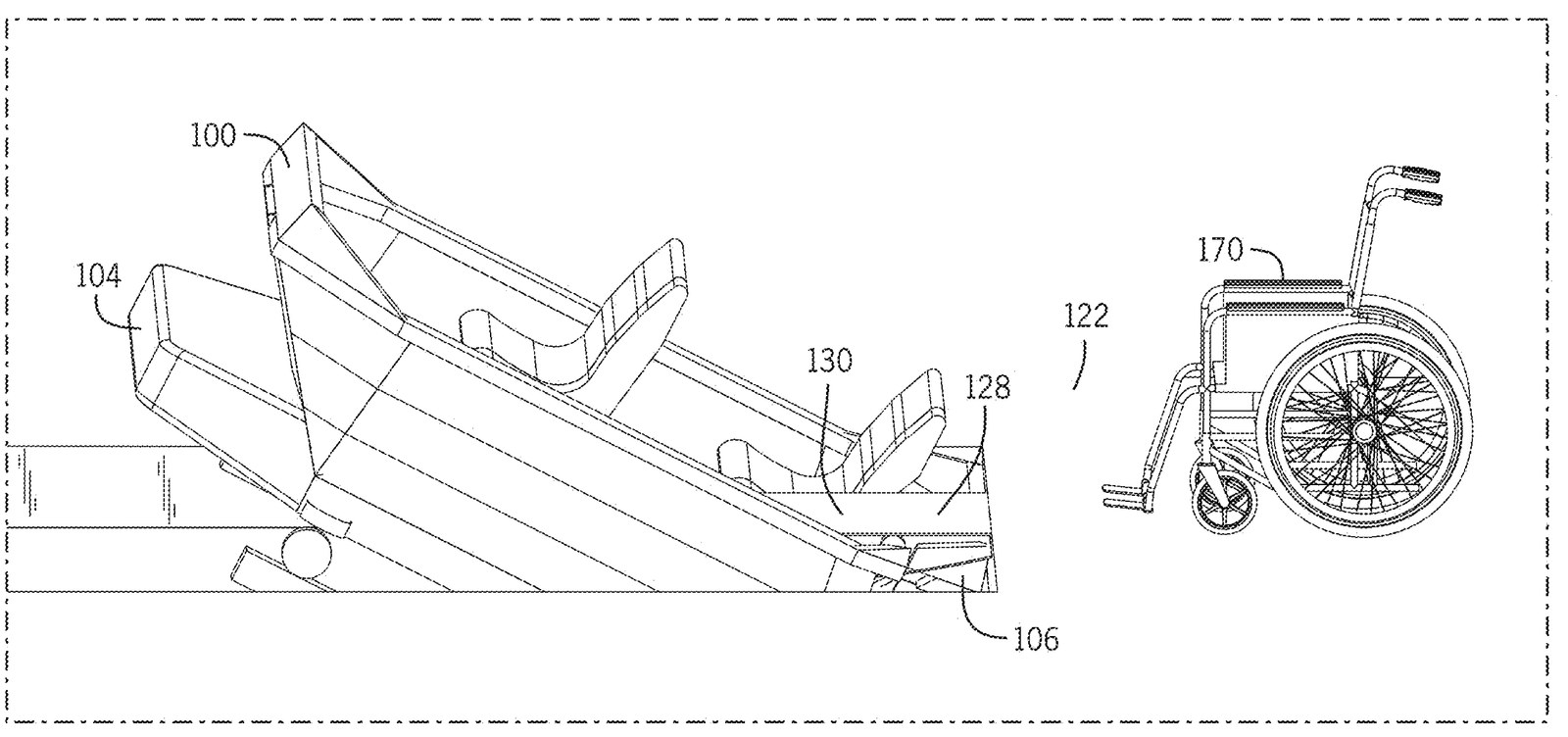
FIG. 7: the boat tilted into its loading position, with a wheelchair waiting on the loading platform. Image: U.S. Patent and Trademark Office / Disney Enterprises, Inc. (rotated upright)
Why boats are the hard case
The application lays out the problem. Boat sides typically need to sit high to keep water out, and the filing says doors "are not typically used on boats for ingress/egress due to their inherent leak probability." That leaves a wheelchair loading from above the side of the boat, which the filing says complicates the loading platform with long loading ramps and fall protection rails. Stability and comfort also call for it to ride as low in the boat as possible, leaving a large change in height to manage.
Powered systems are not a simple answer either. According to the filing, "most boat rides do not have power onboard, such as due to the complexity of getting power across the hull without creating a leak prone penetration." It goes on: "Such difficulties create complex, expensive systems that typically do not meet longevity requirements and lead to frequent and costly downtimes and repairs."
How the tilting boat works
In the drawings, a curved ramp sits inside the hull, and on that ramp rides a flat platform on wheels. The trick is that the platform can move without a motor. The filing says its motion "may be attributed to gravity as the platform finds the lowest point of the ramp or track."
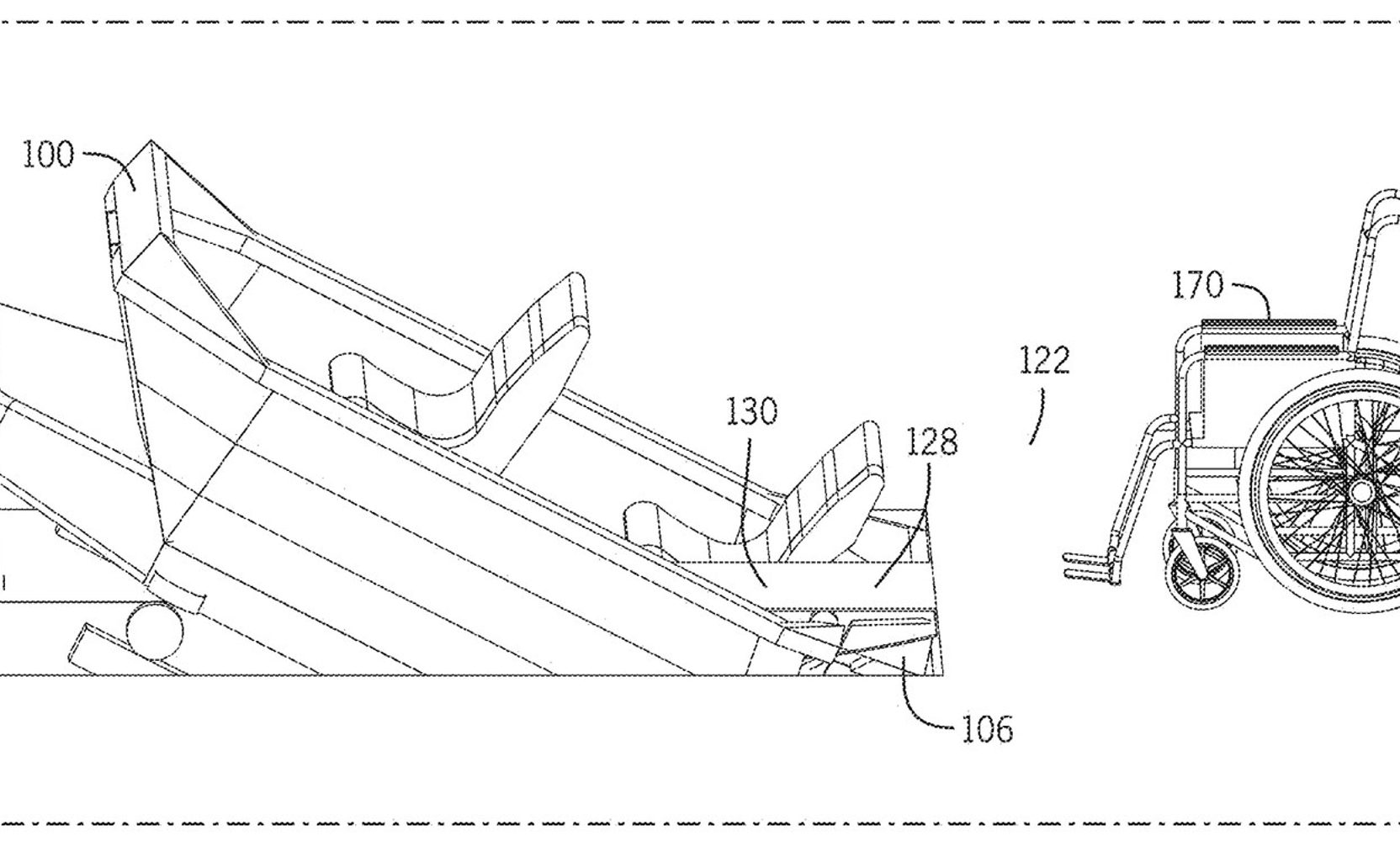
- Tip it: at the loading area, load rails pitch the boat so the front rises and the rear drops below the surface of the loading platform. The rails can be moved by hydraulics, pneumatics or a motor, and the filing says the sides of the boat stay above the waterline "to prevent water intrusion."
- Roll on: the platform rolls down the ramp to the rear of the boat and lines up with the loading platform, so the wheelchair or scooter can roll straight across. Straps, buckles, locks or hooks can then hold it in place.
- Level out: the boat tips forward again, the platform rolls into the forward, lower section of the hull, and it stays flat the whole way. The application says the platform "may act similar to a gimbal." In one version, the wheelchair ends up level with the seats.
- Dispatch: once the platform is in position, "an operator may dispatch the ride vehicle into the normal ride path."
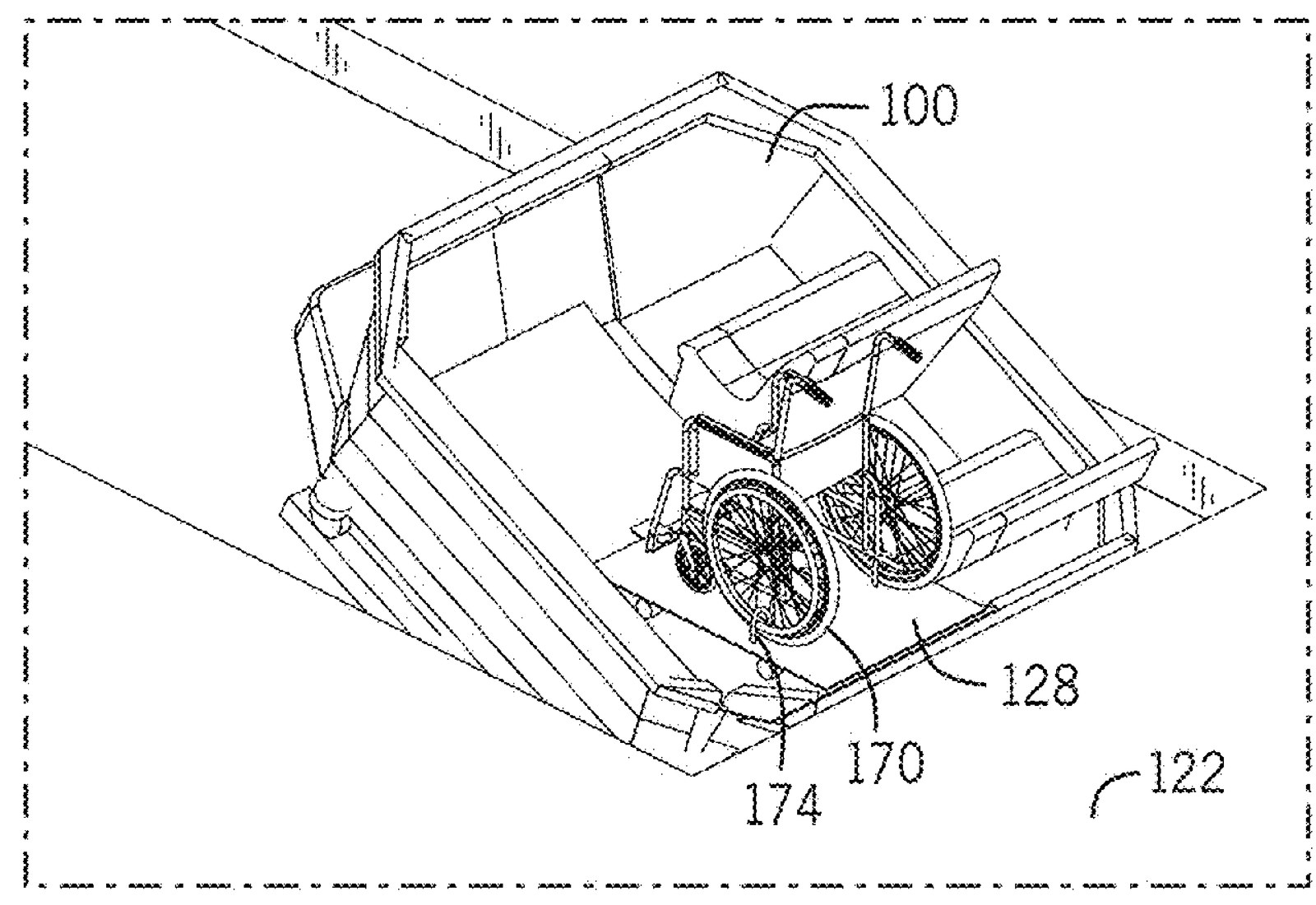
FIG. 8: the wheelchair on the movable platform while the boat is still tilted. Image: U.S. Patent and Trademark Office / Disney Enterprises, Inc.
Gravity is not the only option. The filing also describes moving the platform actively, using pneumatics, hydraulics, or a motor and gear train.
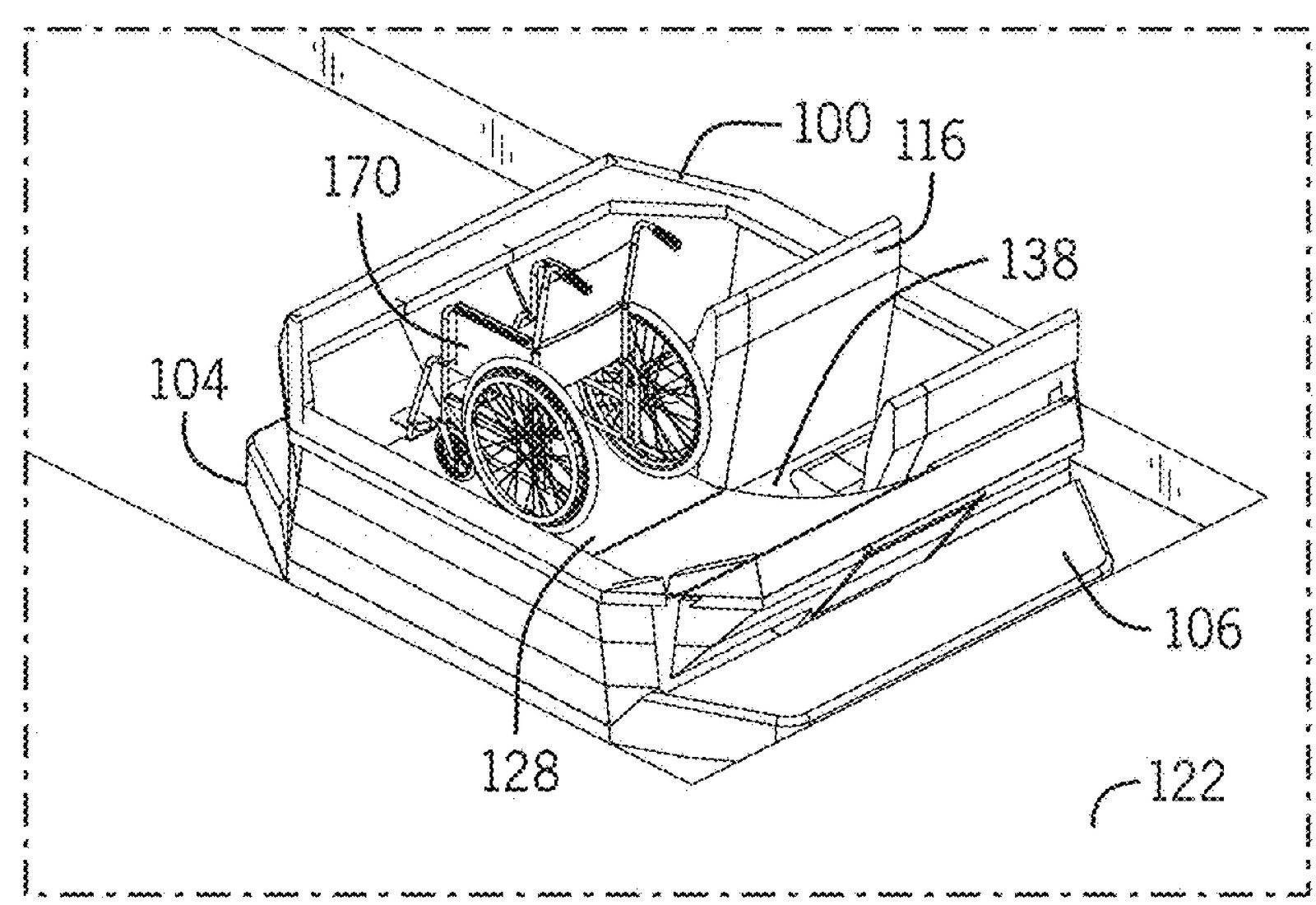
FIG. 10: the boat back to level, with the wheelchair now inside the passenger compartment. Image: U.S. Patent and Trademark Office / Disney Enterprises, Inc.
Not just for wheelchairs, and not just for boats
The claims name "a wheelchair, an electric scooter, or a stroller." The description goes further, listing a walker, "a prop, an animatronic, a maintenance cart or equipment," and even a person with limited mobility who needs help getting in "without stepping over the sides." The application also says the design could apply to vehicles that are not boats.
There are 20 claims in all. The first independent claim covers a ride vehicle whose movable platform carries its load in a flat orientation while the vehicle tilts. The second covers a vehicle with a platform that moves to stay flat as the vehicle moves.
What it does not tell us
This is a published application, not a granted patent, and it does not name any attraction, park or resort. Disney has not announced a ride that uses it. As WDWMagic put it, "Patent filings don't guarantee a system will show up in an actual attraction."
Our take: the most striking line in the filing is not about the new design at all. It is Disney's own description of the powered loading systems most boat rides use as systems that "lead to frequent and costly downtimes and repairs." If a platform that can run on gravity alone does that job with fewer powered parts, this is a reliability pitch as much as an accessibility one.
Sources
- U.S. Patent and Trademark Office, published application US 2026/0272736 A1, Rider Inclusive Transport Aide
- WDWMagic, Disney Patents New Boat Ride System That Lets Wheelchairs and Scooters Load Without Transferring
Image credits: All three drawings are from US 2026/0272736 A1. The U.S. Patent and Trademark Office says the text and drawings of patents are typically not subject to copyright restrictions, with limited exceptions, and this application carries no copyright notice. Credit: U.S. Patent and Trademark Office / Disney Enterprises, Inc. FIG. 7 has been rotated upright from the printed page orientation.