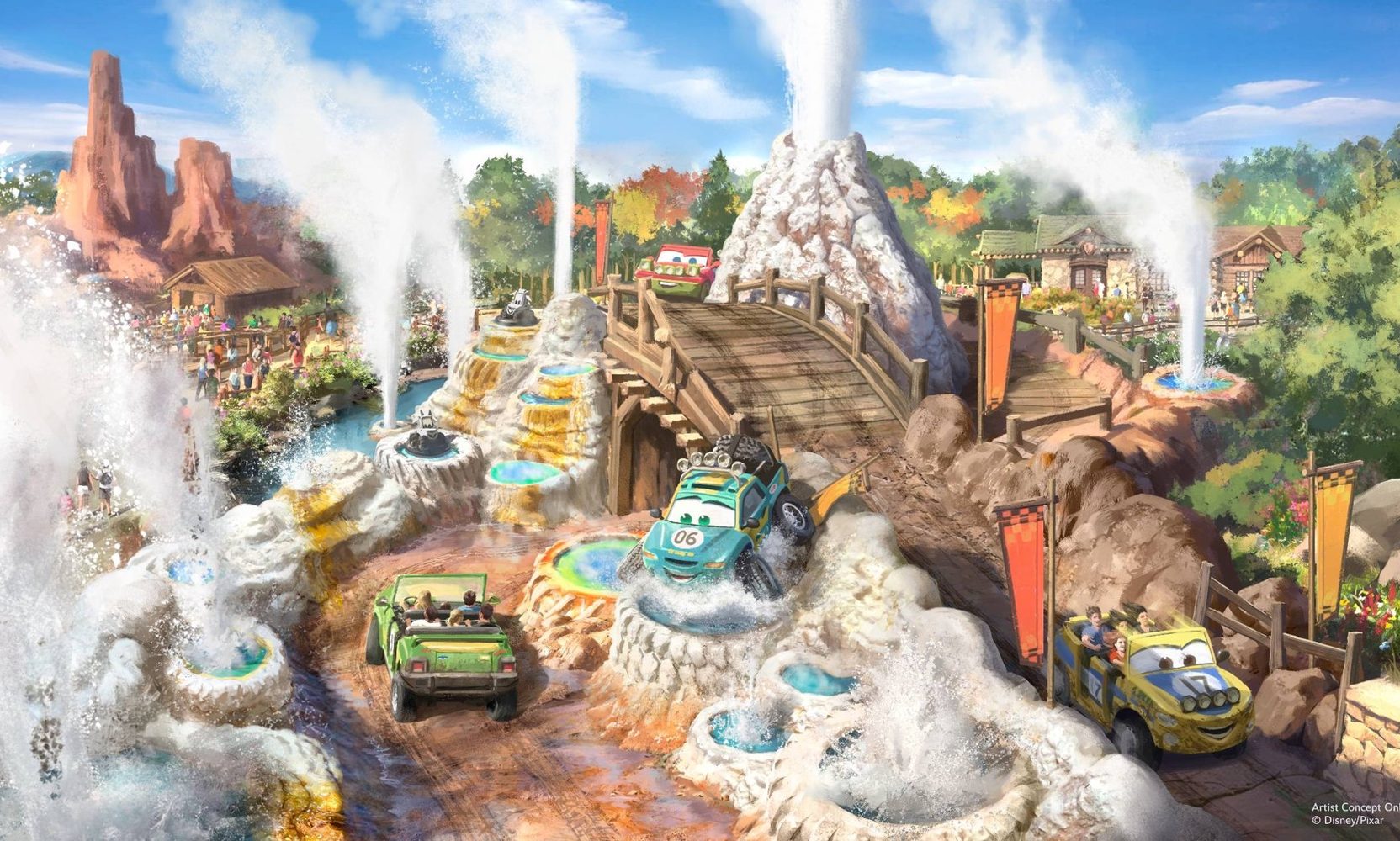
Disney's Latest Patent Filing Explains How Cars Ridge Run Rally's Guest-Steered Vehicles Could Stay on Course
How do you let guests steer their own off-road car through a mountain ride without anyone wandering off into the scenery? A new Disney patent filing offers an answer: a guide wire along the track, a sensor at each end of every vehicle, and a top speed that drops the farther you drift from your line.
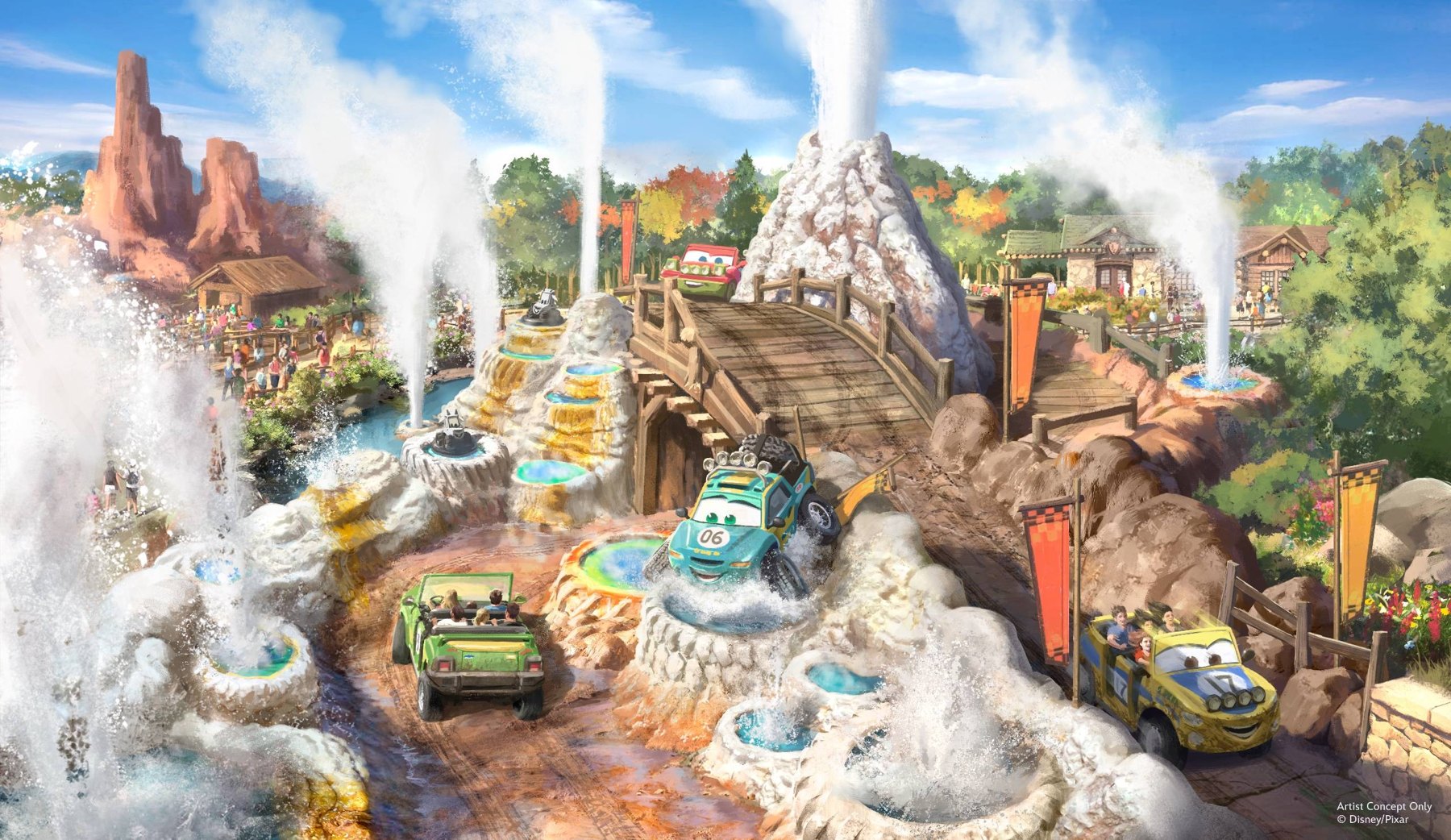
The filing, US patent application 2026/0376916 A1, was published on Thursday, November 26. It is titled "Ride System Featuring a Free-Range Vehicle Platform," lists Disney as the applicant, and names Derek Lee Howard and Edward Allen Nemeth, who were also the inventors on the original application. WDWMagic and BlogMickey both connect it to Cars Ridge Run Rally, the off-road rally ride planned for Piston Peak National Park at Magic Kingdom. Disney has not said the patent will be used for the ride, and WDWMagic points out that neither Cars nor Magic Kingdom is named anywhere in the filings.
A sequel to a patent Disney already holds
The original application was filed on September 11, 2024, and published in March 2026. It was granted on August 25, 2026, as US Patent 12,717,355, with 20 claims. The new filing is a "continuation" of that patent, and Disney filed it on July 28, 2026, about four weeks before the grant.
A continuation reuses the original's description and drawings. What changes is the claims, the part of a patent that spells out what Disney wants legal protection for. The granted patent's claims focus on riders choosing a route and setting their own speed and heading, while a fleet controller keeps the vehicles spaced apart. As BlogMickey puts it, "The guide wire, the front and rear sensors, and the track markers all appear in the original description and drawings, but none were claimed until now."
How a car knows where it is
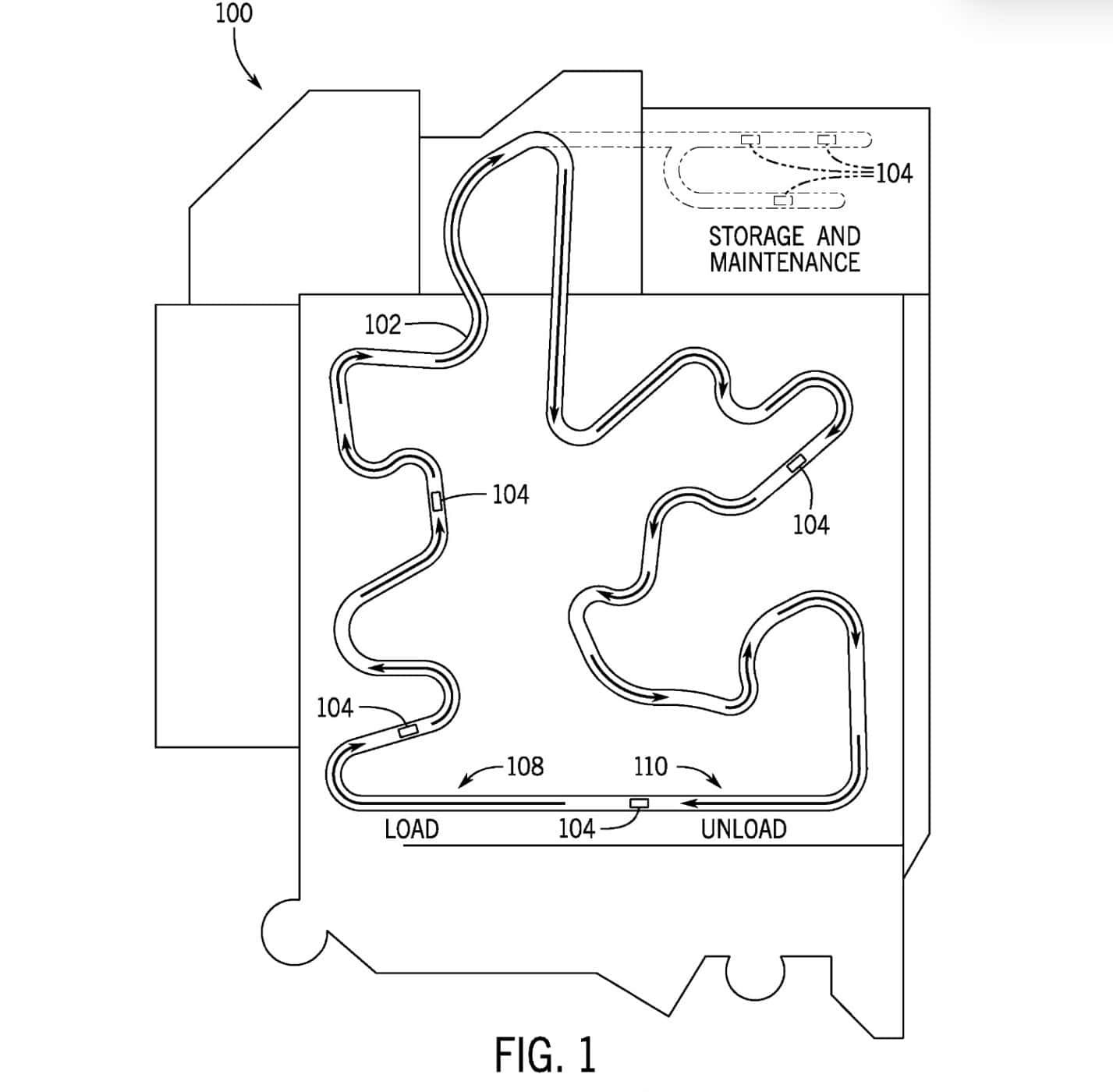
- A guide wire runs along the track, and each vehicle carries one sensor near its front and another near its rear that measure their distance from the wire.
- Put the two readings together and the controller knows both the car's sideways position and the direction it is pointing.
- The controller draws a boundary at some distance from the wire and can move it as track conditions change. Steer toward that boundary, and the system can step in on position, speed or steering.
- With no steering input, the car simply tracks the guide wire.
- Position markers spaced along the course (modules, beacons, signal markers or visual markers) are read by the car as it passes, so it can tell how far along the route it is and how fast it is going.
- Each vehicle has a propulsion motor driving its wheels, powered by a battery.
A top speed that keeps changing
- The further a car strays from its default line, the lower its top speed can be.
- A car can be slowed based on the grade of the track.
- A car can be held back by the one in front of it.
- Each car has a safety zone around it whose size can change with the car's speed. The shared description's example is a bigger zone at higher speeds and a smaller one at lower speeds.
Some of these speed limits echo claims in the granted patent, which already covered slowing a car on a grade or when it strays from its default path. Other claims deal with the fleet as a whole. A central fleet controller gives every vehicle a default line and pace, and moves it along that line whenever nobody is steering. Guests can drive off that line, but the controller checks how far they have strayed, or how far off pace they are, against a limit for the track and can take back control. It can also override a guest to send a vehicle to an attraction element. Much of this fleet section restates ideas the granted patent already claims as a ride system. The difference is the format: here they are written as method claims, step-by-step descriptions of how to run the whole fleet (and, separately, how to keep a single car on its guide wire), something the granted patent did not have at all. The last fleet claim covers several paths through the ride, each with its own attraction elements, for guests to choose from, which the granted patent also claims. Rerouting vehicles onto one path when something goes wrong on another is already among the granted patent's claims, and the shared description gives examples like a disabled vehicle, road damage or maintenance.
Where it lines up with the concept art
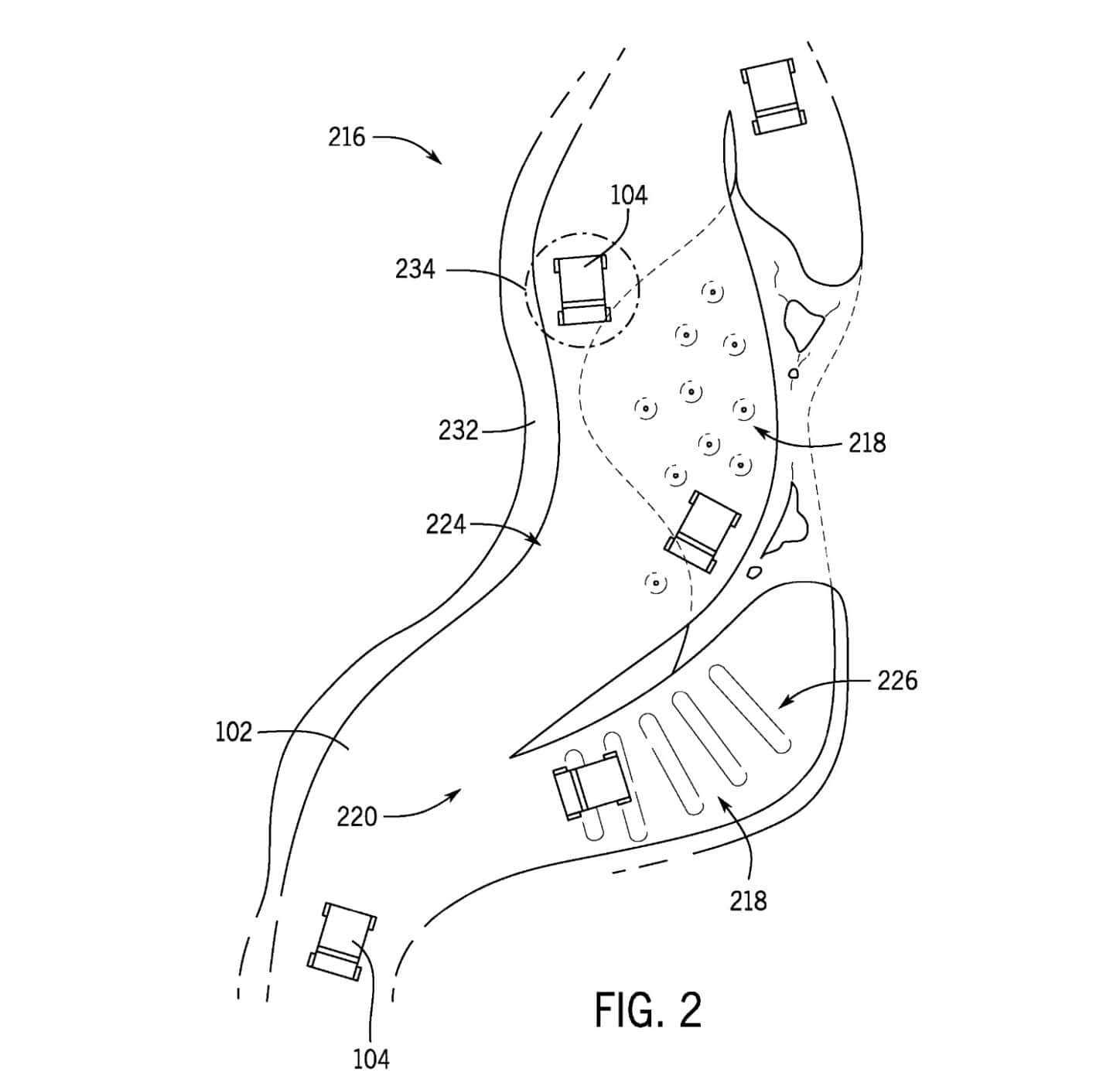
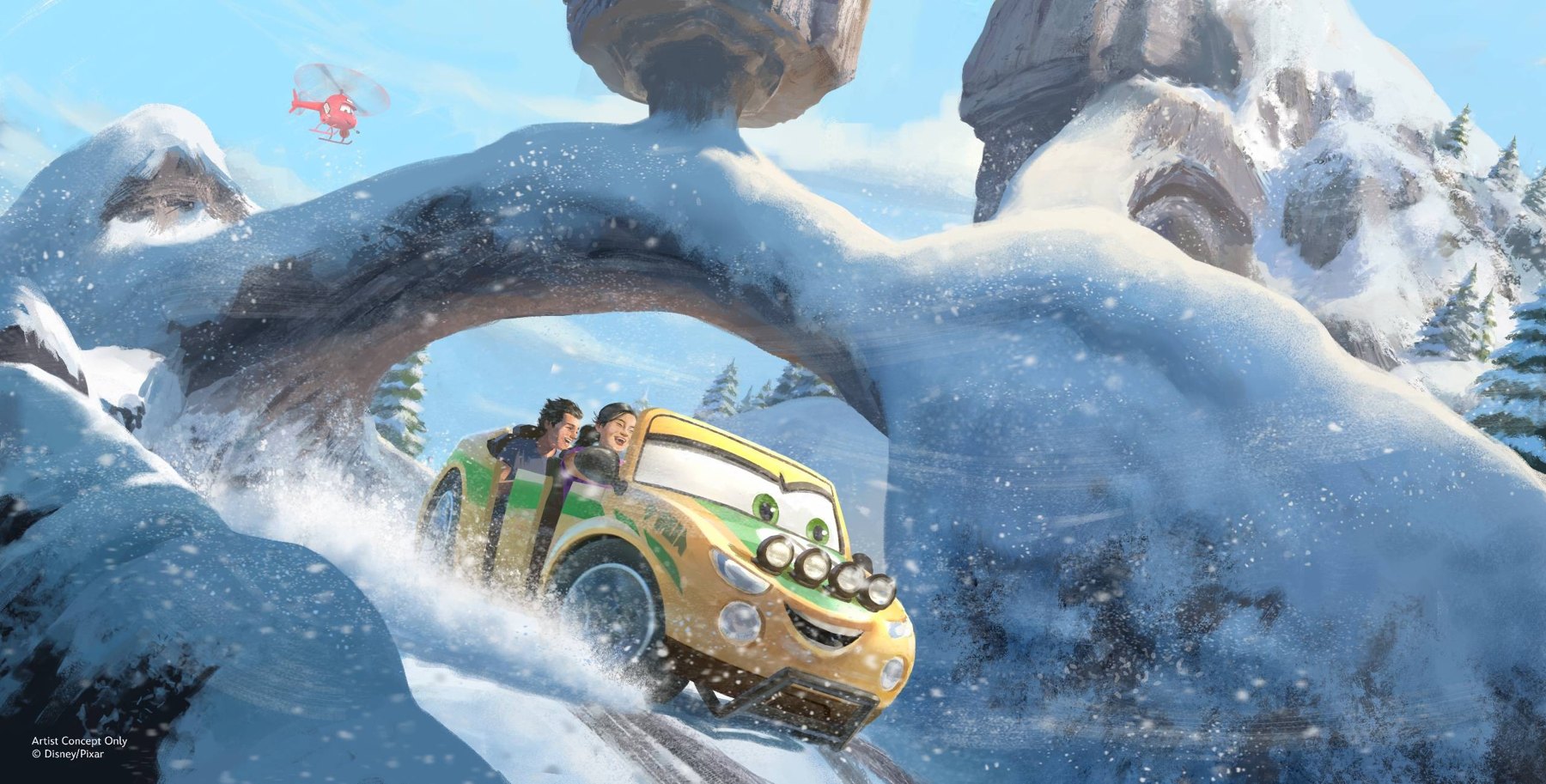
The shared description includes alternate routes on different levels of the track, with an example where one path is open air and the other runs through a cave. WDWMagic points out that Disney's summit concept art shows a similar layout, with one car up on a stone bridge and a second passing through a tunnel below it.
The description also says the vehicles can go up and down hills and move between levels without elevators. As WDWMagic notes, that fits what Disney described at D23: a climb up to Piston Peak's snowy summit and a camelback drop on the way down. To push cars back toward their intended path or pace, the patent lists effects such as an avalanche, a bridge collapse, a landslide or a road that suddenly closes. Disney has not said whether any of these will appear on the ride.
What we still don't know
On paper, guests steer and set their own speed, but Disney has not said how much of that riders will really get on Cars Ridge Run Rally. The new application has not been granted, and its claims could be rewritten or rejected along the way. Disney has not yet given an opening date for Cars Ridge Run Rally or the rest of Piston Peak National Park. On the ground, the latest milestone we reported was foundation concrete going in in October.
So, would you rather take the wheel yourself, or let the fleet controller do the driving?
Sources
- USPTO, US 2026/0376916 A1, "Ride System Featuring a Free-Range Vehicle Platform" (published November 26, 2026)
- WDWMagic, "New Disney Patent Filing Reveals How Piston Peak Ridge Run Rally Vehicles Stay on Course" (November 26, 2026)
- BlogMickey, "New Disney Patent Offers More Insight Into Cars Ridge Run Rally Ride System" (November 26, 2026)
- Google Patents, US12717355B2, "Ride system featuring a free-range vehicle platform"
Image credits: concept art, Disney/Pixar. Patent drawings, Disney / USPTO, via BlogMickey.
Mentioned in this story
Check out our guides for more on each place in this story: