 News
News Deep Dive: The Boring Company's Underground Tunnel System Coming to Universal Orlando
If you've ever sat in bumper-to-bumper traffic on International Drive trying to get from Universal Studios Florida to, well, anywhere, you already understand the problem. Now imagine skipping all of that entirely — whisking beneath the surface in a Tesla through a neon-lit tunnel, arriving at Epic Universe in minutes instead of crawling through 45 minutes of I-Drive gridlock.
That vision moved a major step closer to reality on February 11, 2026, when the Shingle Creek Transit and Utility Community Development District officially selected Elon Musk's The Boring Company to develop an underground transit system connecting Universal Orlando Resort's parks. It's the company's first theme park project and its biggest expansion outside of Las Vegas.
Let's dig in — pun absolutely intended. rendering of The Boring Company's tunnel loop system.
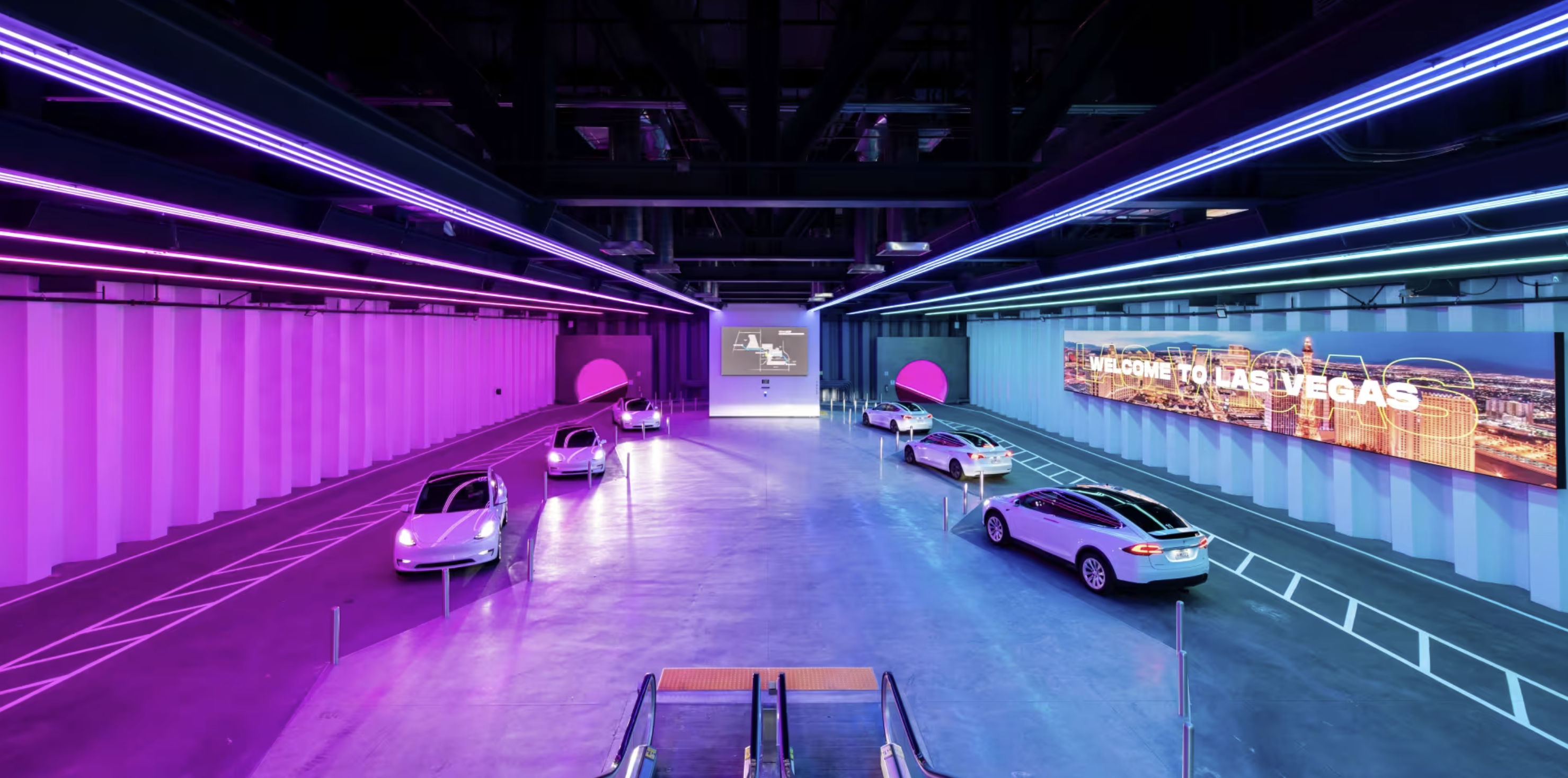
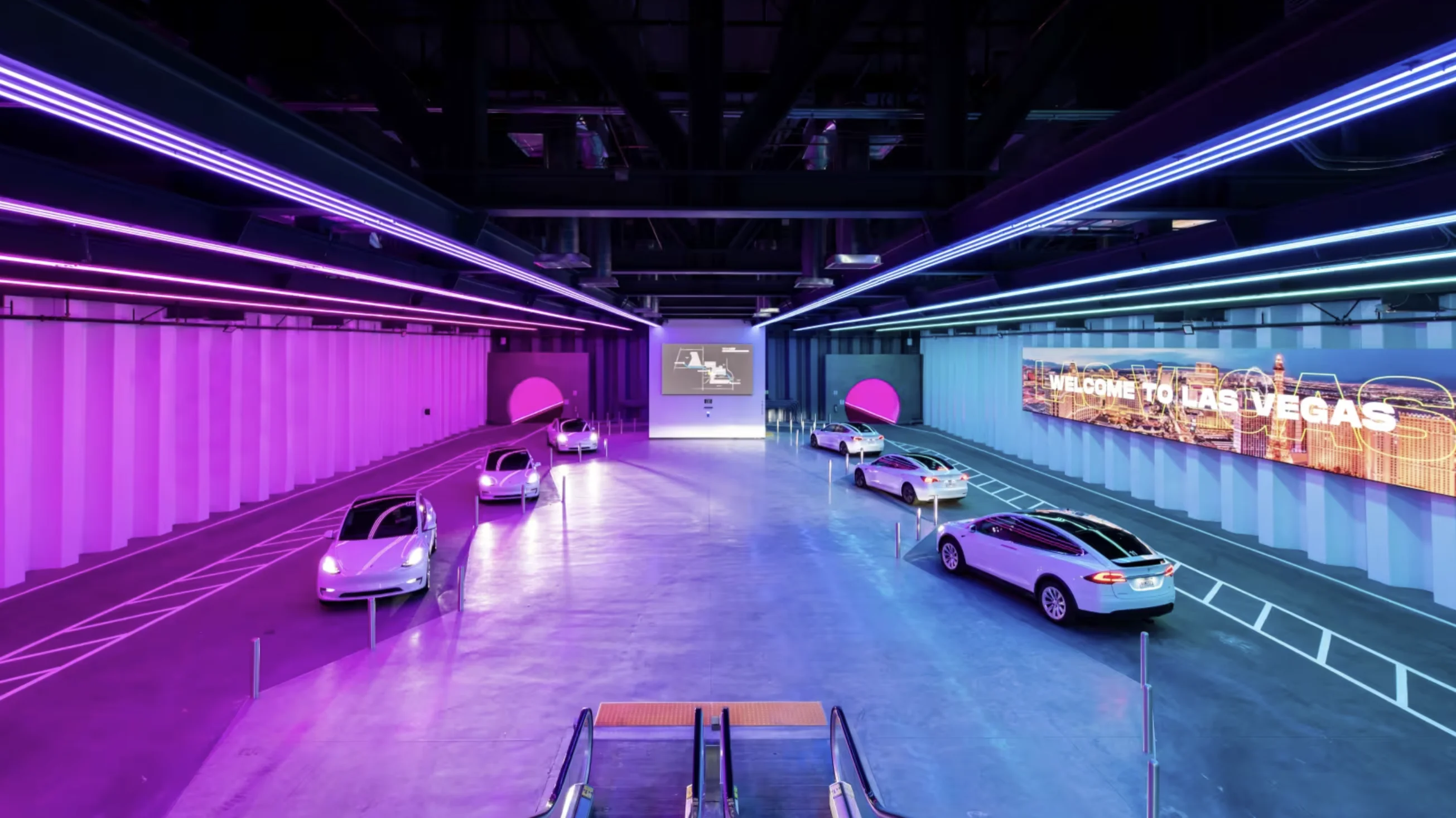
Tesla vehicles inside a station in the Vegas Loop.
What's Been Officially Announced
Here's what we know for certain: the Shingle Creek district's board voted to authorize staff to enter contract negotiations with The Boring Company after a competitive bidding process. Three companies submitted proposals:
The Boring Company (selected — highest score from evaluators)
V2R
Sunshine Connection Partners (which included autonomous transit firm Glydways)
The board was specifically looking for an "innovative, future-ready, point-to-point solution" to address the persistent congestion along International Drive. While the competing bids included elevated guideway systems, the district chose to go underground — literally.
The Route
The planned system would cover approximately 4 to 5 miles across multiple phases, with a total envisioned scope of a 6.7-mile transit network connecting Universal's major hubs:
Phase 1: Epic Universe and its surrounding hotels
Phase 2: Expansion to Universal Studios Florida, Islands of Adventure, CityWalk, and locations along International Drive
This is significant because Universal's properties are split by major roadways. The original parks sit north of Sand Lake Road, while Epic Universe is south of it, bordered by John Young Parkway and State Road 528. Currently, guests rely on shuttle buses, rideshares, or personal vehicles to move between the two campuses — a trip that can take anywhere from 15 to 45 minutes depending on traffic.
Technical Details
The proposal describes a twin-tunnel configuration — one tunnel in each direction — using Tesla vehicles for on-demand, point-to-point transportation. Stations could be built underground or above ground with ramp access into the tunnels. The Boring Company has assigned eight internal specialists (tunnel engineers, structural engineers, and boring machine experts) along with six subcontractors handling fire protection, communications, soil treatment, and concrete work.
The company estimates that permitting, design, and construction could take roughly 18 months once approvals are secured. They also noted plans to deploy multiple tunnel boring machines simultaneously to accelerate the timeline.
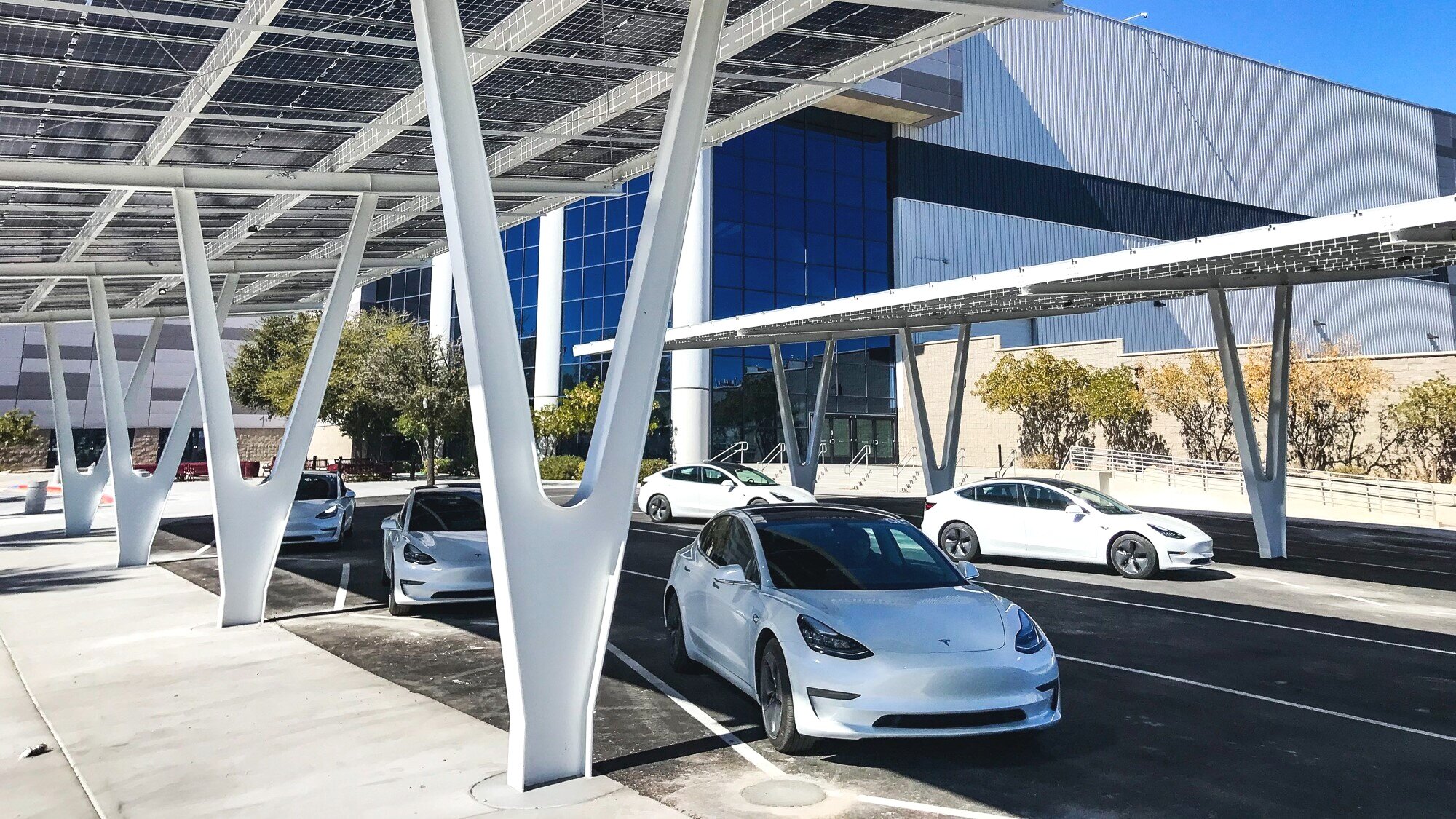
Vegas loop above ground station. Photo credit: The Boring Company
Important Caveats
It's worth emphasizing: this is not a done deal yet. The selection authorizes negotiations, but any final agreement still requires full board approval. Officials have stated they will evaluate the project's operational and financial feasibility before giving the green light. An Orlando-based geotechnical firm has been engaged to evaluate the area's soil and limestone conditions — an important step given Central Florida's high water table and sinkhole-prone geology.
What Is The Boring Company, Anyway?
For the uninitiated, The Boring Company is Elon Musk's tunneling and infrastructure venture, founded in 2016. The concept is deceptively simple: dig tunnels faster and cheaper than traditional methods, then run electric vehicles through them to bypass surface traffic entirely.
The company developed its own tunnel boring machines — the Prufrock series — which it claims can bore tunnels significantly faster and at a fraction of the cost of conventional equipment. They've built seven R&D tunnels across three cities (Hawthorne, CA; Adelanto, CA; and Bastrop, TX) to test and refine the technology.
The Vegas Loop: Proof of Concept
The Boring Company's crown jewel — and the strongest argument for bringing this technology to Orlando — is the Vegas Loop in Las Vegas. What started as a modest convention center shuttle has grown into an expanding urban transit network that's already served millions of passengers.
Las Vegas Convention Center Loop
The original LVCC Loop opened in April 2021 and was built for approximately $47 million — a fraction of what a comparable light rail or monorail system would cost. It was constructed in roughly one year with zero disruptions to convention center operations.
1.7 miles of tunnel (later expanded to 2.1 miles with 5 stations in 2024)
Reduces a 45-minute walk across the convention center campus to 2 minutes
Peak capacity of 4,500+ passengers per hour
Has handled 32,000+ daily passengers during major conventions
Expansion Beyond the Convention Center
The Vegas Loop has since expanded well beyond its convention center origins:
Resorts World Connector (opened 2022) — 2-5 minute rides to LVCC and other stations
Westgate Connector (opened 2024) — featured the company's first craneless boring machine retrieval
Encore Connector (opened 2025) — connects Encore at Wynn to the convention center in approximately 55 seconds, built in less than 10 weeks
Harry Reid International Airport — service began in early 2026
The Numbers
As of early 2026, the Vegas Loop has transported more than 3.5 million passengers through 8 operational stations across approximately 3.5 miles of tunnel. The system currently handles better than a million passengers per year.
But the approved scope is staggering: 68 miles of tunnel and 104 stations when fully built out. At final capacity, the system is projected to serve up to 90,000 passengers per hour, connecting the airport, Allegiant Stadium, the convention center, downtown, and dozens of resorts along the Strip — all with transit times between 2 and 8 minutes.
Beyond Vegas: Other Boring Company Projects
The Universal Orlando project isn't the only expansion on The Boring Company's horizon:
Music City Loop (Nashville, TN) — Currently under construction. Will connect downtown Nashville, Music City Center, and Lower Broadway to West End and the airport. Fully electric and privately funded.
Dubai Loop (Dubai, UAE) — Under contract with a 6.4 km pilot phase featuring 4 stations. Construction is set to begin late 2026.
Cybertunnel (Austin, TX) — Already operational at Tesla's Gigafactory, transporting Cybertrucks beneath an 8-lane highway in 60 seconds (replacing a 12-minute surface drive).
Why This Makes Sense for Universal Orlando
Universal's I-Drive corridor problem is real and getting worse. With Epic Universe drawing massive crowds since its opening, the traffic burden on International Drive, Sand Lake Road, and surrounding arterials has intensified. The current shuttle bus system works, but it's slow, weather-dependent, and doesn't provide the seamless resort experience that Universal is clearly aiming for.
An underground loop system would:
Eliminate surface traffic from the guest transportation equation entirely
Dramatically reduce transfer times between parks from 30-45 minutes to potentially 5-10 minutes
Operate rain or shine — a real consideration in Florida's thunderstorm season
Free up parking infrastructure — guests could park once and tunnel to any destination
Create a premium, futuristic guest experience that reinforces Universal's brand
As one local resident, Mary Walters-Clark, told FOX 35 Orlando: "We are very congested at certain times and certain hours and that would certainly help."
Universal Orlando Resort is exploring underground tunnel transit to connect its properties. Photo credit: Inside the Magic
Fun Speculation: Where Could This Go?
Note: Everything in this section is purely speculative. None of the following has been announced or confirmed by Universal, The Boring Company, or any official source. This is just us having fun thinking about the possibilities.
Convention Center Connection
The Orange County Convention Center sits just a few miles south of Universal's original campus on International Drive. It hosts some of the largest trade shows and events in the country and drives enormous hotel demand in the I-Drive corridor. A tunnel spur connecting the convention center to Universal's loop would be a natural fit — imagine conventioneers hopping underground to CityWalk for dinner and back in minutes. Given that The Boring Company's entire origin story is the Las Vegas Convention Center, this feels like a matter of "when" not "if."
Airport Express
Orlando International Airport (MCO) is approximately 15 miles from Universal's parks, but the drive can take anywhere from 25 minutes to over an hour depending on traffic. Brightline already connects the airport to the convention center area, but a direct tunnel link from MCO to Universal's campus would be a game-changer for resort guests. The Vegas Loop has already proven this model by connecting to Harry Reid International Airport. Could we see Universal guests whisked from baggage claim to their hotel lobby underground? It's ambitious, but not impossible.
The RoboVan Factor
The Boring Company's bid documents specifically referenced potential future integration of Tesla's configurable RoboVan for both passengers and cargo. The RoboVan could carry up to 20 passengers — far more than a Model Y — which would dramatically increase system throughput. Imagine boarding a RoboVan at your Universal hotel, traveling underground to Epic Universe, and arriving at a station inside the park. It could also be used for behind-the-scenes cargo transport — moving food, merchandise, and supplies between parks without a single delivery truck on surface roads.
Could Disney Follow Suit?
Walt Disney World is roughly 10 miles from Universal Orlando. Disney has its own transportation challenges — the Monorail system is aging, bus transit between resorts and parks can be painfully slow during peak periods, and the Skyliner gondola system only serves a limited area. If The Boring Company proves the concept works in Orlando's geology and climate, it's not a stretch to imagine Disney exploring a similar solution for connecting Magic Kingdom, EPCOT, Hollywood Studios, and Animal Kingdom. Disney has historically been an early adopter of transportation innovation (the Monorail debuted in 1971), so underground transit isn't as far-fetched as it sounds.
An I-Drive Entertainment Loop
Perhaps the most exciting long-term possibility is a broader International Drive entertainment loop that extends beyond Universal's properties. SeaWorld, ICON Park, the convention center, Pointe Orlando, and dozens of hotels and restaurants line this corridor. A shared tunnel network could transform I-Drive from one of Orlando's most congested roads into a seamlessly connected entertainment district — all underground, all electric, all without a single traffic light.
What's Next
For now, the project remains in the negotiation phase. The district will work with local businesses and Universal Orlando to finalize the route, conduct operational and financial viability analyses, and establish a construction timeline. No groundbreaking date has been set.
But with Epic Universe already drawing massive crowds and the Vegas Loop proving that this technology works at scale, the momentum feels real. The Boring Company has stated it has "the necessary internally produced tunneling equipment and personnel immediately available" — suggesting that once contracts are signed, things could move fast.
We'll be watching this one closely. The idea of zipping beneath International Drive in a Tesla on your way to ride Starfall Racers might sound like science fiction, but if Las Vegas is any indication, it could be Orlando's reality sooner than you think.
Sources: FOX 35 Orlando, Teslarati, ClickOrlando / News 6, Inside the Magic, The Boring Company, Fox Business. Photos credited individually throughout the article.