Found Alone on an Alaska Beach, a 220-Pound Orphaned Walrus Calf Named Annautaq Now Lives at SeaWorld Orlando
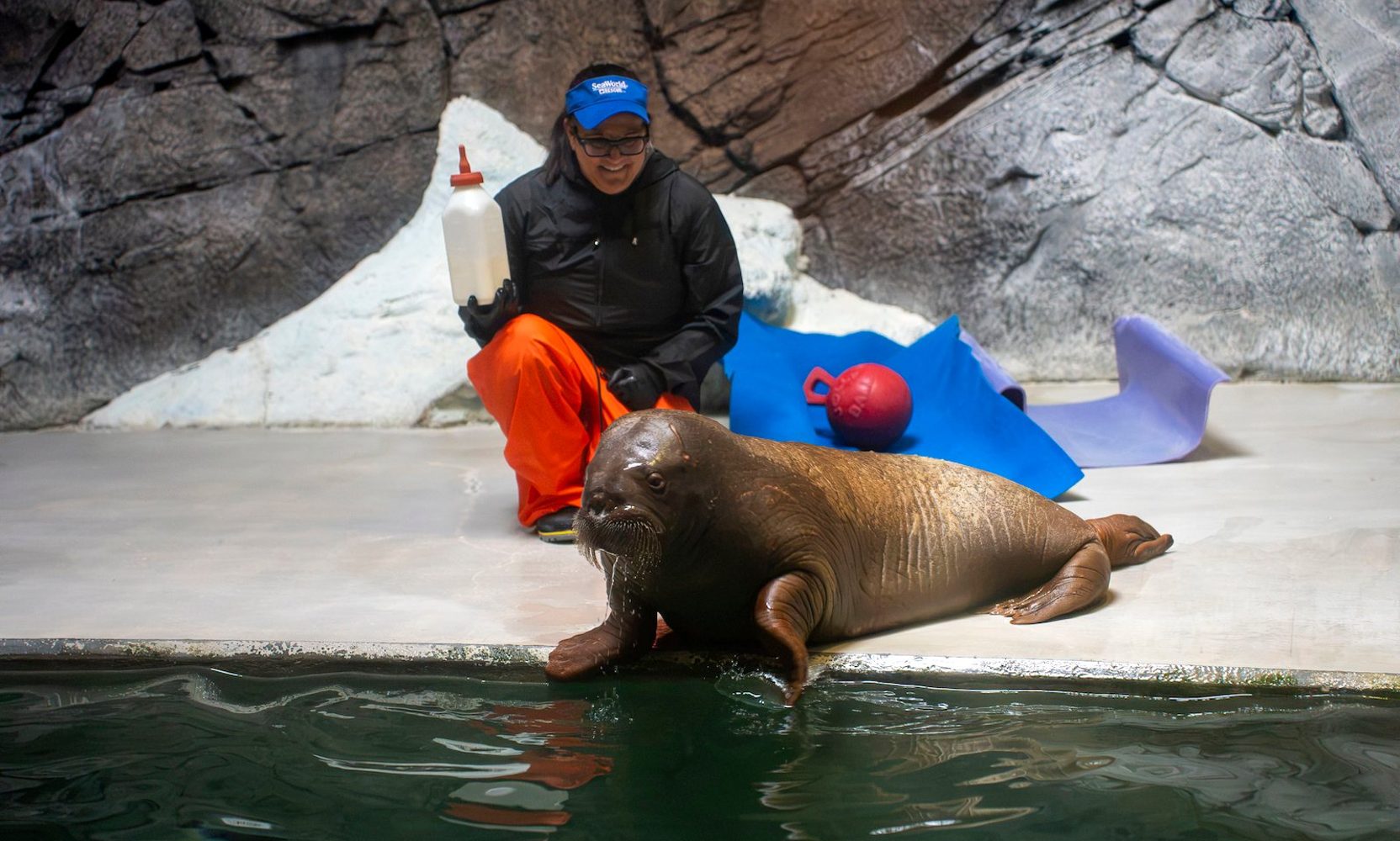
He weighs about 220 pounds, he is five months old, and he still drinks from a bottle. Meet Annautaq, the newest walrus at SeaWorld Orlando.
SeaWorld announced on Wednesday, October 21, that an orphaned male Pacific walrus calf now lives at the park after a rescue in northern Alaska and rehabilitation at the Alaska SeaLife Center, according to the park's press release. In the release, SeaWorld calls the park "one of only four U.S. institutions currently capable of housing walruses."
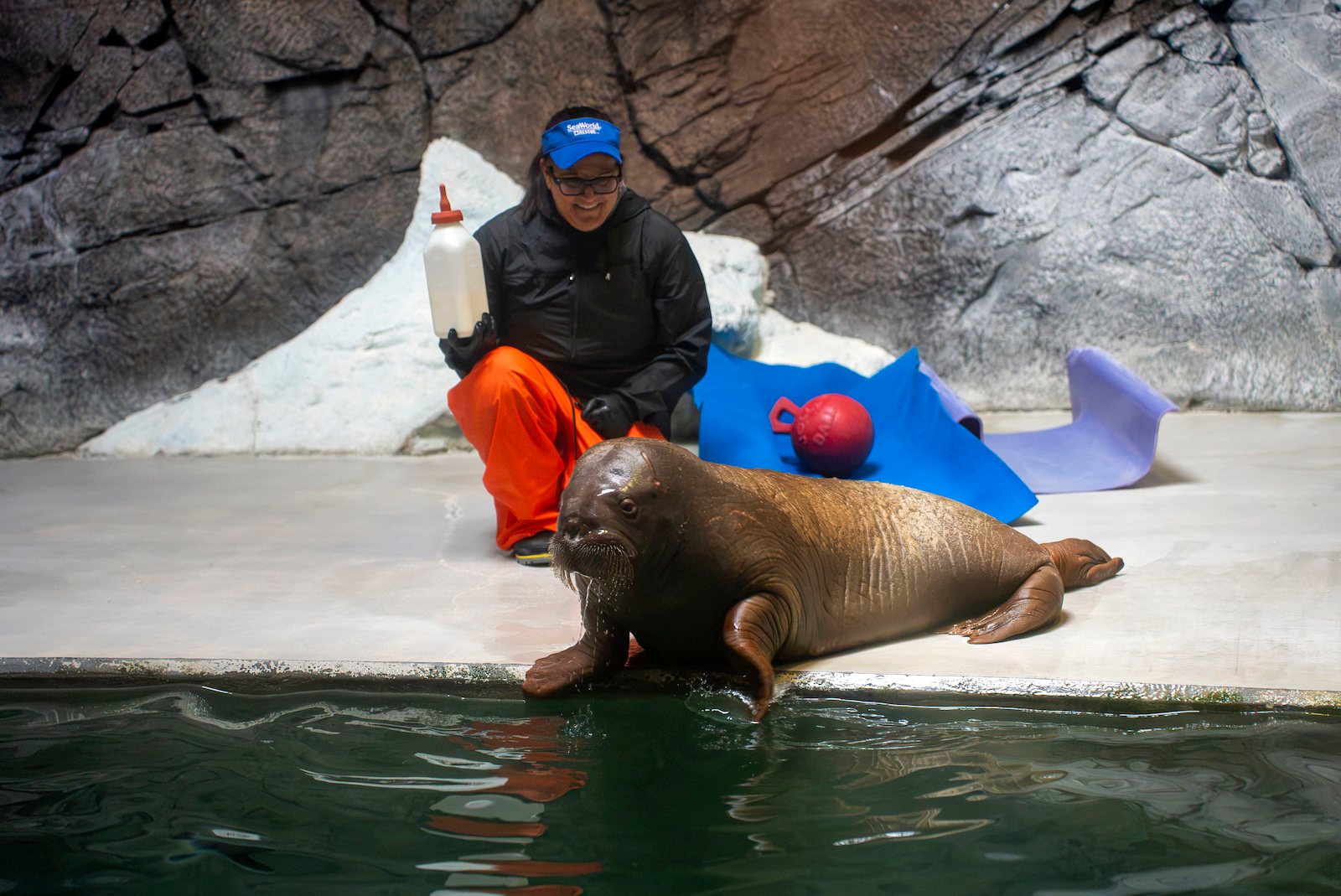
Annautaq at the edge of a pool at SeaWorld Orlando, with a caretaker holding his bottle. Photo: SeaWorld Orlando, via Laughing Place
How he was found
According to SeaWorld, wildlife research intern and local community member Violet Anniskett and U.S. Geological Survey scientist Tony Fischbach came across the calf alone on an isolated stretch of northern Alaska shoreline, after a herd of walruses had departed in heavy surf. The release says they found him "hiding between the older remains of two adult walruses, already being targeted by scavenging birds."
The two looked after him for several days until he could be flown to the Alaska SeaLife Center in Seward, an effort that also drew on local residents and federal wildlife officials. Anniskett named him Annautaq, pronounced "ah-now-tuq." The name means "axe" in Iñupiaq and honors her father's Iñupiaq name.
Why he cannot go back
Annautaq responded well to rehabilitation, but the U.S. Fish and Wildlife Service determined that he could not be released into the wild. As SeaWorld explains it, Pacific walrus calves get all of their nutrition from their mothers' milk for their first year and depend on their mothers for protection and for learning survival and social behaviors.
Specialists in walrus care then weighed where he should go, and SeaWorld says the decision came down to his long-term needs, including the chance to grow up in a herd with other walruses. The park sent animal care and veterinary staff with walrus experience to Alaska to help care for him and prepare him for the 4,000-mile journey to Florida.
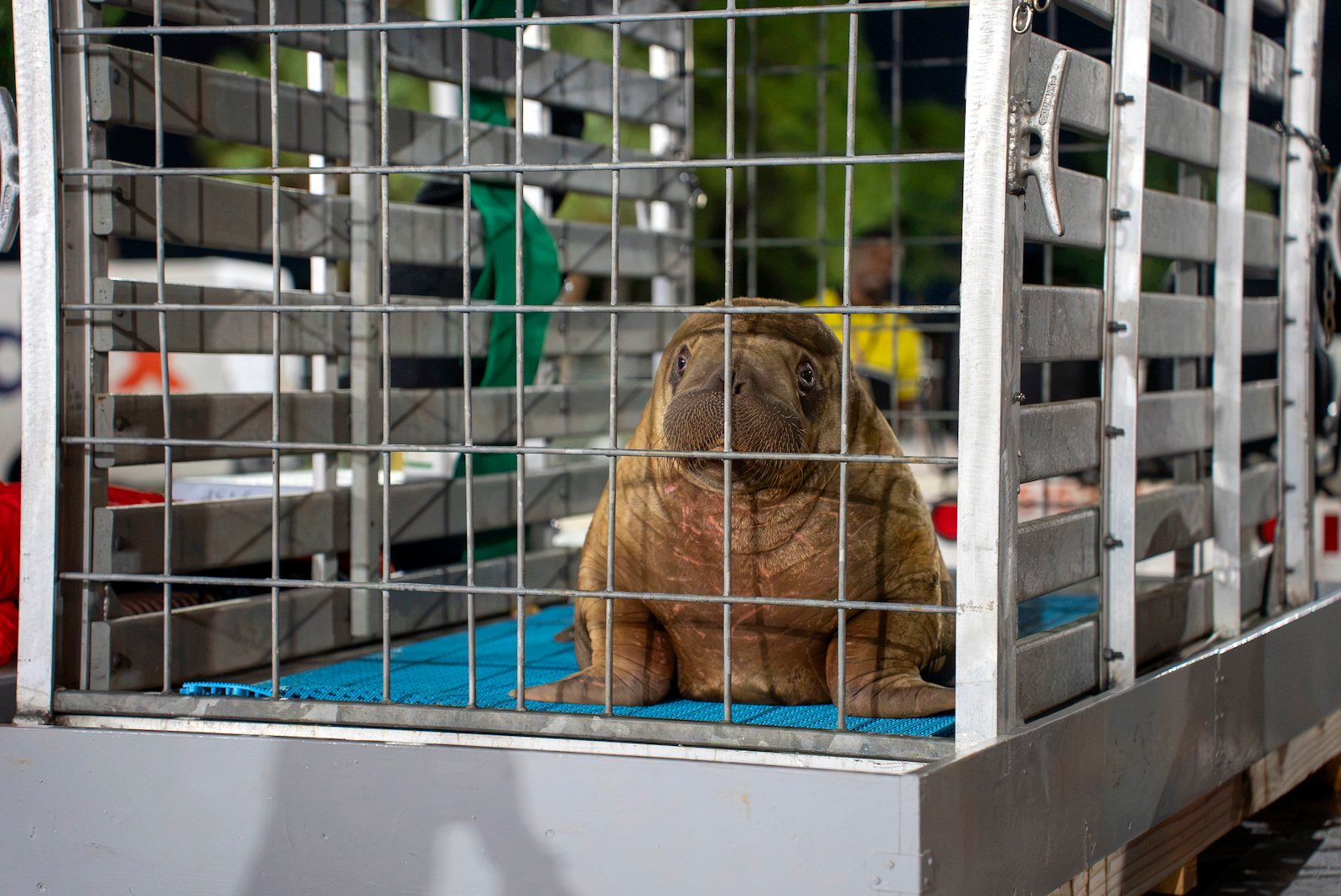
Annautaq in his transport crate. Photo: SeaWorld Orlando, via Laughing Place
"Our team was able to stabilize Annautaq, support his medical and social needs around the clock and prepare him for the next stage of his care," said Jane Belovarac, wildlife response curator at the Alaska SeaLife Center.
Bottles, quarantine and a waiting herd
In Orlando, Annautaq gets as many as six bottles a day, plus vet care and round-the-clock support, while he sits out a planned 30-day quarantine that SeaWorld says is meant to help protect the health of the park's resident animals. His milk is a high-fat formula that SeaWorld says its own veterinary and animal care teams originally developed to copy how fatty a mother walrus's milk is.
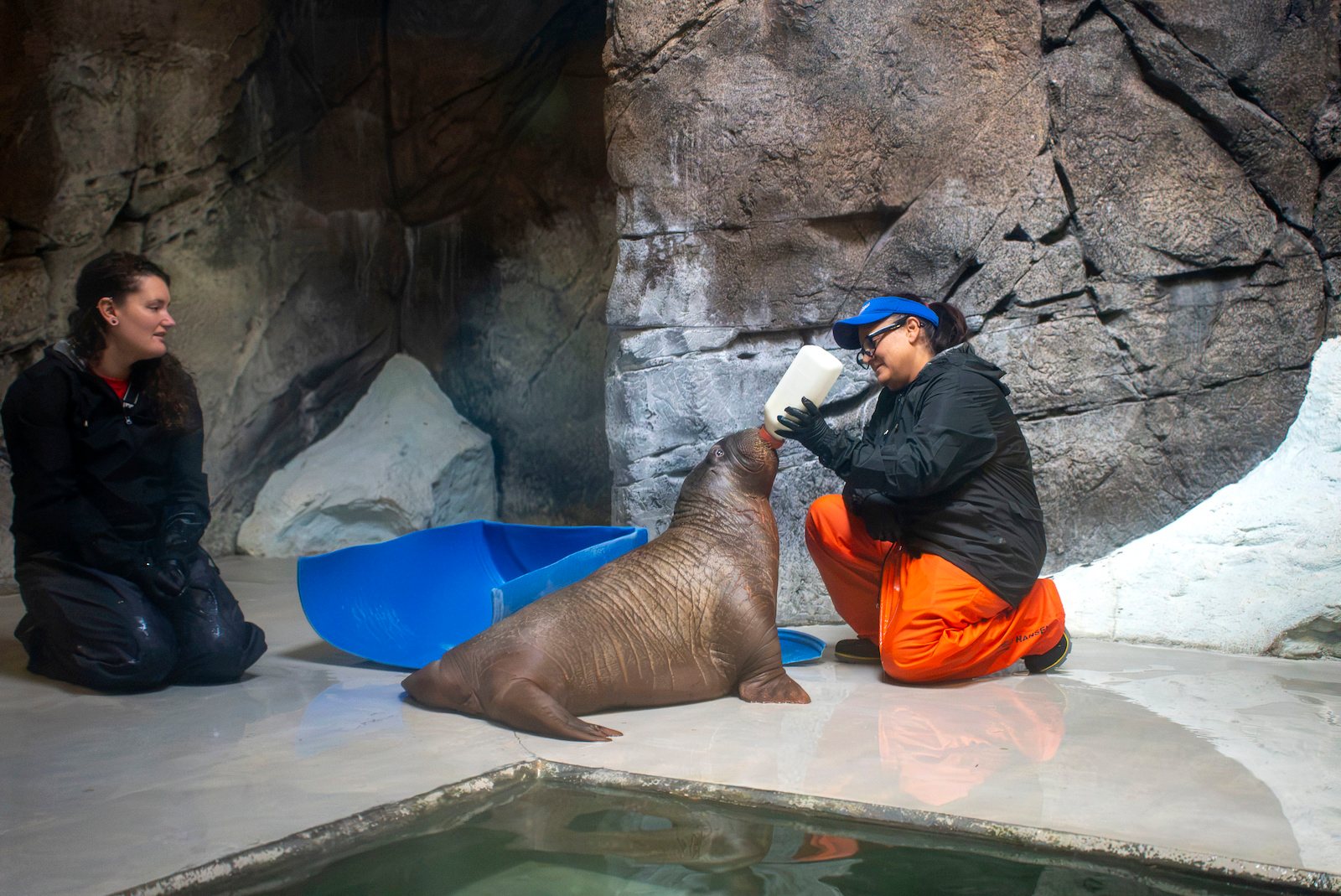
Bottle time for Annautaq. Photo: SeaWorld Orlando, via Laughing Place
Once he is ready, he will meet the park's walrus herd, which includes:
- Uki, 2: another Alaska rescue, who went through rehab at the Alaska SeaLife Center before she moved to SeaWorld Orlando.
- Kaboodle, 23: an experienced mother who has served as a surrogate to rescued calves, Uki included.
- Garfield, 44: rescued as an orphaned calf in Alaska himself and hand-raised at SeaWorld Orlando.
"As he settles in, we'll make introductions to Garfield, Kaboodle and Uki at his pace," said Jim Kinsler, curator at SeaWorld Orlando.
When can you see him?
No public viewing date has been announced yet. SeaWorld says "the timing of herd introductions and public viewing will be guided by his animal care team." In the meantime, you can see the resident herd in the walrus habitat at Expedition Odyssey, and SeaWorld says it will post updates on Annautaq on its @SeaWorld and @SeaWorldOrlando Instagram accounts. The Alaska SeaLife Center's Instagram and Facebook pages have photos and video of his rescue and early care.
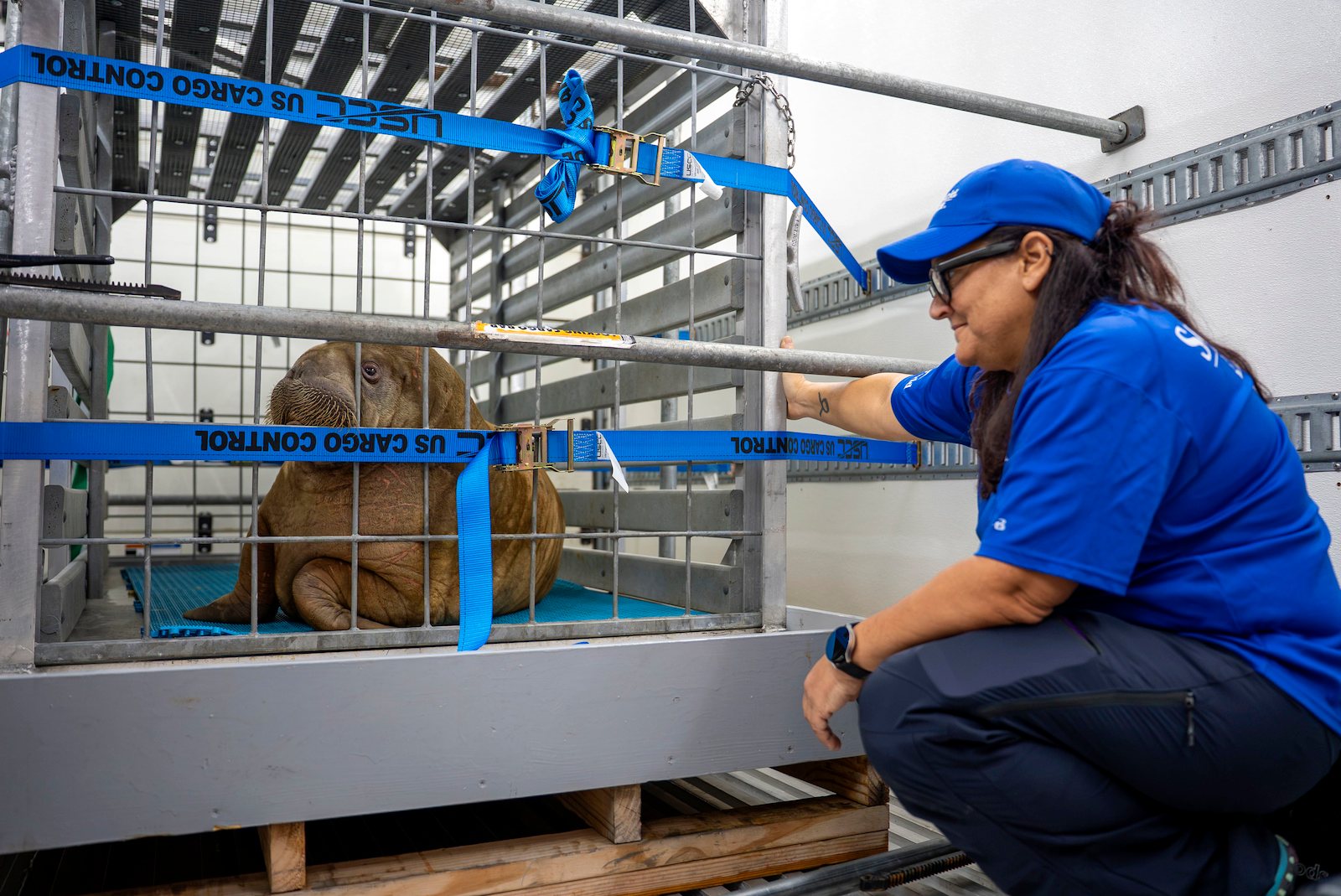
A SeaWorld caretaker checks on Annautaq during his move. Photo: SeaWorld Orlando, via Laughing Place
What would you name the next one, and who do you think wins Annautaq over first, Kaboodle or Uki?
Sources
- SeaWorld Orlando, "Baby Walrus Rescued in Alaska Finds a New Home at SeaWorld Orlando" (October 21, 2026), via the SeaWorld Orlando media room
- Laughing Place, SeaWorld Orlando walrus calf arrival (October 21, 2026)
Image credits: SeaWorld Orlando (handout photos, via Laughing Place).
Mentioned in this story
Check out our guides for more on each place in this story: