Reedy Creek's Walt-Era Hot Water Loop to the Magic Kingdom Resorts Is About to Be Sealed Forever
Every so often a line item sneaks through a CFTOD consent agenda that isn't really about the dollars. It's about what the dollars finish.
At the Central Florida Tourism Oversight District's February 27, 2026 board meeting — the same meeting where a $6.5M Studios North Central Energy Plant electrical upgrade quietly got green-lit — a different board report, Board Report 7.1, authorized a contract so understated most people reading the packet would roll right past it. A $1.54M civil-works job to decommission some pipe.
Except the pipe in question has been in the ground since Magic Kingdom opened in 1971. And when Gulfcoast Utility Constructors finishes the work, one of the most quietly remarkable pieces of Walt-era infrastructure at Walt Disney World will be gone for good.
The Contract
Board Report 7.1 authorized Contract #C006979 to Gulfcoast Utility Constructors Inc. for $1,540,000. Add a standard 10% construction contingency and total authorized project value comes to $1,694,000. In CFTOD's own scope language, from the packet:
"Permanent abandonment and removal of the remaining sections of the High Temperature Hot Water (HTHW) hotel loop serving the Magic Kingdom Resort Area, including all associated demolition, restoration, permitting, and coordination."
The giveaway phrase is remaining sections. This is Phase II. A Phase I of the same abandonment happened earlier and — as best we can tell from searches of the Disney parks press — was not covered at the time. So the first real public notice of any of this work is the final chapter of it.
Which is fitting, because the hot loop was always the most invisible thing at Walt Disney World.
Primer: What Is a "High Temperature Hot Water" Loop, Exactly?
In most American buildings, heat comes from one of three places. A gas-fired furnace in the basement. An electric heat pump on the side of the building. Or, in large commercial towers, a boiler room tucked into a mechanical penthouse.
In 1971, Walt Disney World did it a fourth way, one that was uncommon even at the time and is effectively extinct in new American construction today. It built a single enormous superheated water plant and ran pressurized, superheated water — typically in the 350 to 400°F range, well above normal boiling but kept liquid under roughly 160 to 300 psi of pressure — out through miles of insulated underground piping to every major building on property that needed heat or domestic hot water.
The water wasn't for the taps. It was a heat carrier. At each resort, a heat exchanger pulled thermal energy out of the HTHW loop and handed it off to the building's own closed-loop heating system — baseboard radiation, reheat coils, domestic hot water pre-heat, kitchen use, laundry, the pool. Then the cooled water went back to the central plant on a return line to get reheated and sent out again.
One central boiler plant. Miles of pipe. A whole resort district warmed from a single address. It's the kind of infrastructure decision you make when you're building a city from scratch and you want the efficiency of district energy. Which is, of course, exactly what Walt and Reedy Creek were doing.
The Walt-Era Context
The HTHW hotel loop was part of the same original 1971 utility buildout that gave Walt Disney World its AVAC pneumatic trash system, its chilled-water district cooling loops, its own telephone system, its own fire department, and its own sewage treatment plant. Reedy Creek Improvement District was, at the time, possibly the most technologically ambitious piece of private municipal infrastructure in the United States.
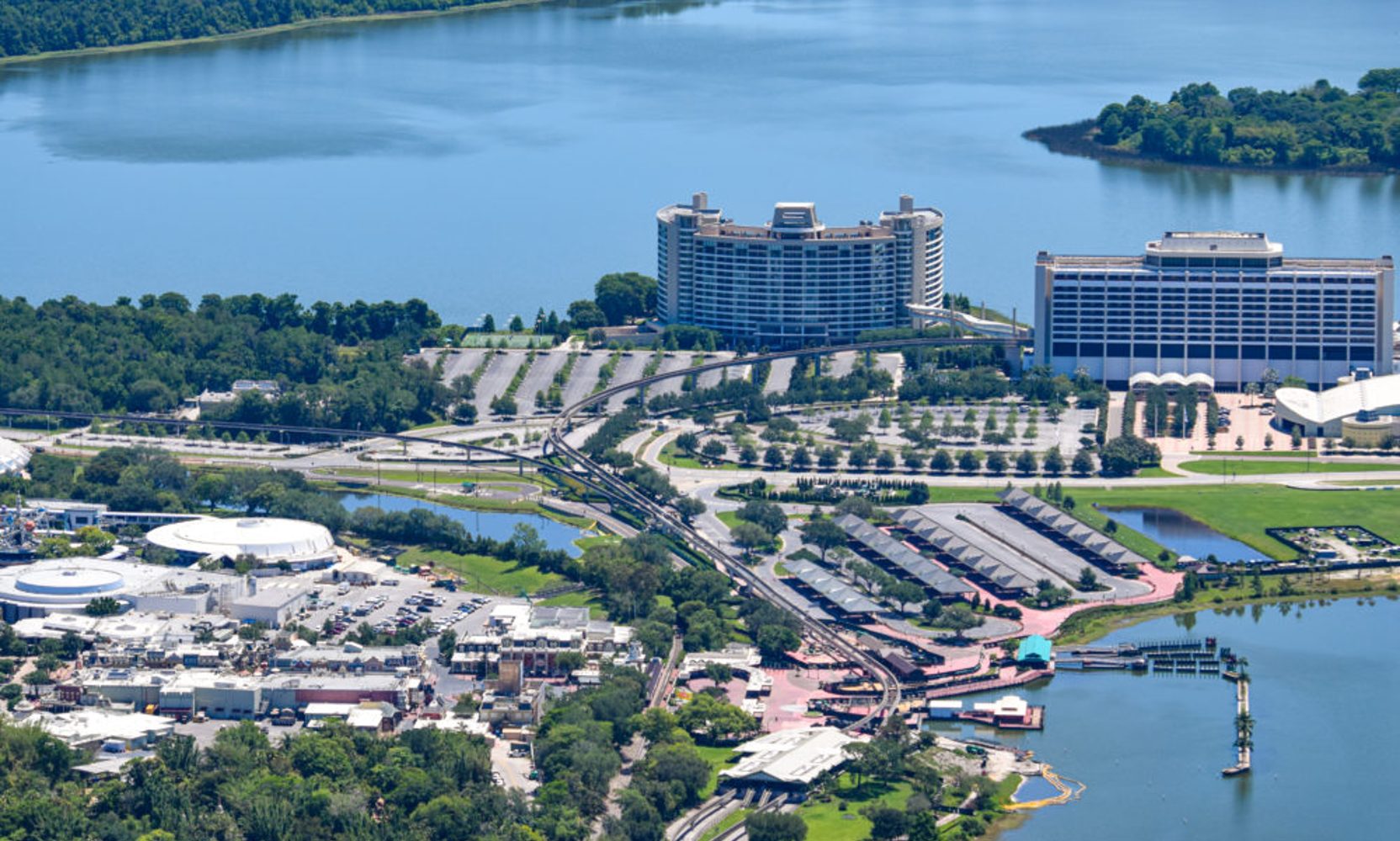
The hot loop in particular ran from the Central Energy Plant — the same one that's still there, behind the scenes west of the Magic Kingdom — south and east to the resorts then under construction on the shore of Seven Seas Lagoon. Contemporary Resort. Polynesian Village. Later, when it opened in 1988, the Grand Floridian. Those were the original hotel loop customers, and the three resorts that together make up what Disney still calls the Magic Kingdom Resort Area.
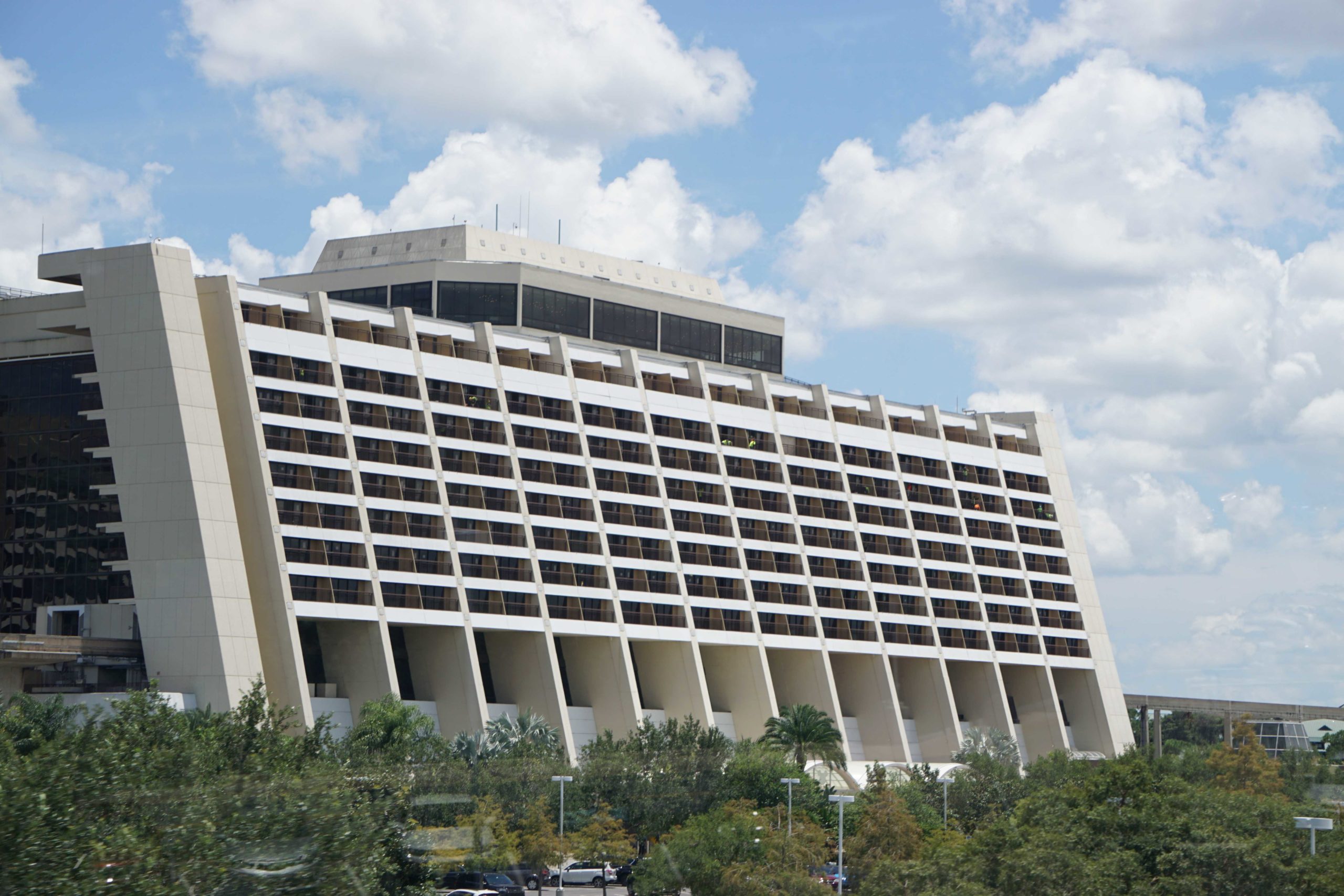 Disney's Contemporary Resort, a 1971 opening-day hotel and one of the original HTHW hot loop customers. Image: WDW News Today.
For 54 years, that loop has been buried out there under World Drive, parking lots, service roads, landscape beds, and in some places under the resorts themselves — doing its silent, unglamorous work.
Why It's Ending
Centralized HTHW distribution is the kind of engineering decision that made perfect sense in 1971 and makes progressively less sense every decade afterward. A few things have changed since the Nixon administration:
- Resort-level heating plants got cheap, modular, and efficient. A modern condensing gas boiler, or an electric heat pump, is vastly more efficient than the thermal losses incurred dragging superheated water through miles of underground pipe. Every resort that's been seriously refurbished over the last two decades has, at some point, gotten its own local heating solution.
- Florida doesn't actually need that much heat. A centralized hot-water system makes sense when your heating season runs eight months a year. In Central Florida, genuine heating load happens on maybe 20-40 nights a year. The economics of maintaining a 54-year-old, 350°F, 160-psi, buried steel pipe network for that much duty cycle have been upside down for a long time.
- The pipe itself is old. HTHW lines are legendarily hard to maintain. The water is hot enough to cause instant injury on contact, the pressure is severe, the insulation degrades, and every thermal expansion/contraction cycle over 54 years of Florida summers and the occasional January freeze has been quietly stressing welds and joints the whole time.
- The resorts themselves have been re-plumbed. The Contemporary's tower rooms got an extended refurbishment in 2021. The Polynesian opened its new Island Tower in December 2024 as the headline milestone of its multi-year rework. The Grand Floridian finished a soft-renovated room refresh wave that ran through 2023. Each of those projects was, in mechanical terms, an opportunity to simply cut the old hot-loop feed and install local heat.
Put all of that together and you get a hot loop that's been asked to do less and less every year, by fewer and fewer downstream customers, for a heating season that barely qualifies as one — while costing real money to maintain and running a nontrivial safety and leak risk every day it stays pressurized.
At some point you just seal it.
What "Permanent Abandonment" Actually Looks Like
In civil-engineering practice, abandonment-in-place of buried pressurized pipe typically means (a) draining and depressurizing the line, (b) capping or welding both ends, (c) sometimes grouting the interior so the pipe can't collapse or become a future void, and (d) removing the surface-accessible fittings and valves that might otherwise invite tampering or confusion.
CFTOD's scope specifically includes "removal" and "demolition" language, which suggests at least some of the remaining hot-loop pipe is being physically excavated and pulled — likely the sections in easier-to-dig areas and anywhere it conflicts with planned future work. The rest will be sealed and left where it is, as is standard for deep or difficult segments.
The "restoration" line item in the scope is the key to timing: whatever surface is broken (roads, service paths, landscape) gets patched back. That's the expensive, slow, weather-dependent part and it's why a job like this carries a 10% contingency and takes the better part of a year to execute.
The Quiet Shift Nobody Announces
What's interesting about this contract isn't the money. $1.54M is a nothing number against Disney's capital spend. What's interesting is what it represents: the final paragraph of a years-long, unannounced quiet demolition of one piece of Reedy Creek's original 1971 utility design.
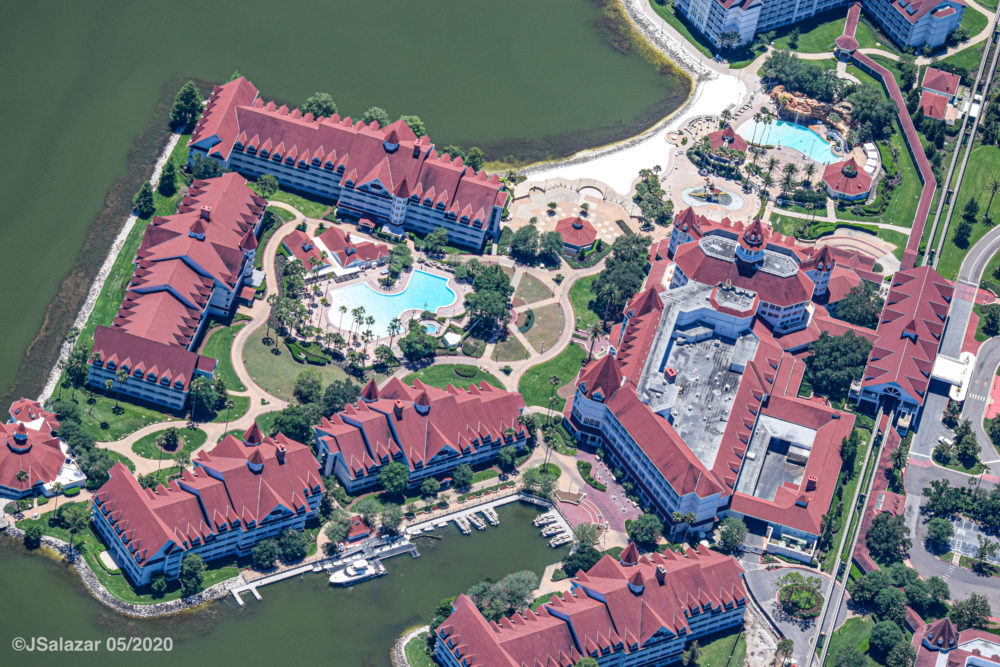 Disney's Grand Floridian, which joined the hot loop when it opened in 1988 and has since been refurbished onto local heating. Image: Jonathan Michael Salazar / WDW News Today.
Walt Disney World is still largely run on Walt-era bones — the utility corridors under the parks, the utilidor routing under the Magic Kingdom, the chilled-water loops, the storm drainage, the well and wastewater systems. But not all of that original infrastructure has aged the same way, and piece by piece, the stuff that made less sense over time has been quietly decommissioned.
The AVAC pneumatic trash system, famously, is still running under the Magic Kingdom. Chilled water is still district-distributed from multiple central plants. But the original HTHW heating plant on the central side has been a diminished piece of the network for years, and with the Magic Kingdom Resort Area customers now fully peeled off, there's genuinely very little reason to keep the Walt-era hot loop pressurized.
Why You Probably Haven't Read About Any of This
Two reasons. First, the packet language is extraordinarily dry — "permanent abandonment and removal of remaining sections" is the kind of sentence that visibly repels theme park bloggers. Second, Phase I of the same work already happened, quietly, without press coverage. Nobody wrote about Phase I because it wasn't obvious Phase I was Phase I until Phase II showed up.
You need both halves of the story to understand what's happening: Disney has been decommissioning the Walt-era hot loop in segments, customer by customer, over the course of years, and the Feb 27, 2026 contract is the final large slug of that work.
Timing
CFTOD civil-works contracts of this size typically run 9-15 months from notice-to-proceed to substantial completion, with most of that time spent on the restoration phase rather than the actual pipe work. Expect the field demolition to begin in the early summer 2026 window, with restoration paving and landscape work stretching into early 2027.
If you're standing at the Contemporary's porte-cochère or driving along Seven Seas Drive and you see a string of utility-barricade pits and pavement saw cuts over the next year, that's what you're looking at: Disney quietly burying the last of a 1971 design choice.
What's Left of the Walt-Era Utility Network
Speculation, clearly labeled as such — a list of pieces of the 1971-era Reedy Creek buildout that are (to our knowledge) still in active service, as of this writing:
- The AVAC pneumatic trash collection system under the Magic Kingdom. Still running. Still one of the most written-about pieces of Disney infrastructure on the internet.
- The Magic Kingdom utilidor. Still in full operational use, though extensively modernized over the decades.
- The Central Energy Plant's chilled-water district cooling loops. Extensively rebuilt and expanded, but the core district-cooling model is intact.
- Reedy Creek's fire suppression water main network. Parts replaced but the topology is largely original.
- The property-wide wastewater collection. Functionally a municipal sewer system; reworked in pieces but structurally the same.
The HTHW hotel loop is about to leave that list. It'll be the first of the big 1971 utility signatures to go fully retired.
There's no ribbon-cutting for a contract like this. There won't be a press release. The only public notice is a three-line entry buried on page something-or-other of a February board packet, and a quiet excavator working behind a resort parking lot in the summer. But it matters. It's the kind of thing theme park history will note later, and the kind of thing that's worth pausing on now, while the pipe is still warm.
Sources
- CFTOD Board of Supervisors — February 27, 2026 Agenda Packet (Board Report 7.1)
- CFTOD Board of Supervisors Documents Index
Image Credits
Featured image: Jonathan Michael Salazar / WDW News Today (aerial of the Magic Kingdom Resort Area showing the Contemporary and Bay Lake Tower on Seven Seas Lagoon). Inline images: WDW News Today (Contemporary Resort exterior), Jonathan Michael Salazar / WDW News Today (Grand Floridian aerial). Disney's Magic Kingdom® and associated marks are property of Walt Disney Parks and Resorts.