The Magic Behind the Movies: A Deep Dive Into Disney's Backlot Tour
If you visited Disney-MGM Studios (now Disney's Hollywood Studios) anytime between 1989 and 2014, there's a good chance one of your most vivid memories involves a wall of fire, a flash flood, and the unforgettable rumble of Catastrophe Canyon. The Backstage Studio Tour — later known as the Studio Backlot Tour — was the beating heart of this park for a quarter century, and it deserves a proper celebration.
A Park Like No Other
When Disney-MGM Studios opened on May 1, 1989, it wasn't just another theme park. CEO Michael Eisner famously declared it "The Hollywood that never was and always will be" — an idealized, timeless version of Tinseltown's Golden Age brought to life in Central Florida.
But what made this park truly special was that it was designed as a working production studio and a theme park simultaneously. Real movies and television shows were filmed here. Sound stages buzzed with actual productions. The animation building housed a satellite studio for Walt Disney Feature Animation, where artists contributed to films like Mulan, Lilo & Stitch, and Brother Bear.
And the crown jewel that brought it all together? The Backstage Studio Tour — a sprawling, two-hour journey through the real magic of filmmaking.
Opening Day: The Full Experience
The original 1989 version of the tour was massive. Spanning roughly half of the park's footprint, it combined a tram ride and a walking tour into an experience that lasted approximately two hours. Nothing else at Walt Disney World was quite like it.
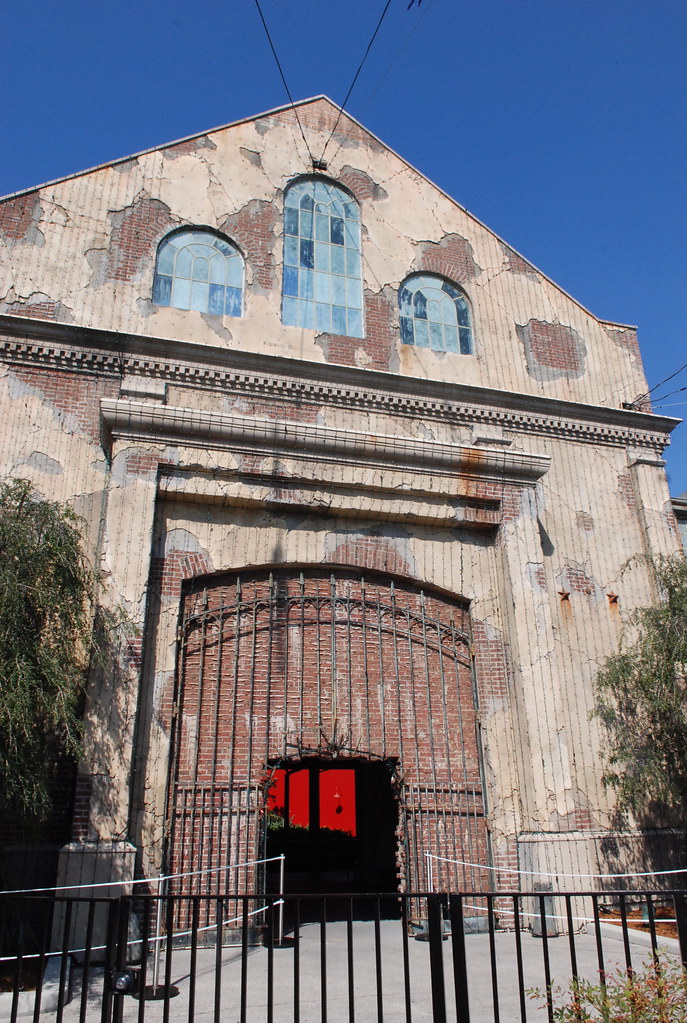
The Backlot Tour tram making its way through the studio lot. Photo by hyku, CC BY-SA 2.0, via Flickr.
Guests boarded trams (in what is now the Star Wars Launch Bay building) and rolled through a series of stops that pulled back the curtain on Hollywood:
The Costuming Department — where the narration loved to point out that "Mickey Mouse alone has more than 150 different costumes."
The Scenic Shop — where set pieces were built from scratch.
Residential Street — a row of recognizable TV home facades, including houses from The Golden Girls and Empty Nest. These weren't just props — they were functional facades used for actual shooting.
Catastrophe Canyon — the signature showstopper (more on this in a moment).
New York Street — a backlot of forced-perspective buildings creating the illusion of an expansive cityscape.
After the tram portion, guests disembarked for a walking tour through special effects workshops, active sound stages (viewed from overhead catwalks), post-production facilities, and a theater showing sneak peeks of upcoming Disney films. The walking tour even included "The Lottery," a short film starring Bette Midler and directed by Garry Marshall — the very first film completely produced on the Disney-MGM backlot.
The Star of the Show: Catastrophe Canyon
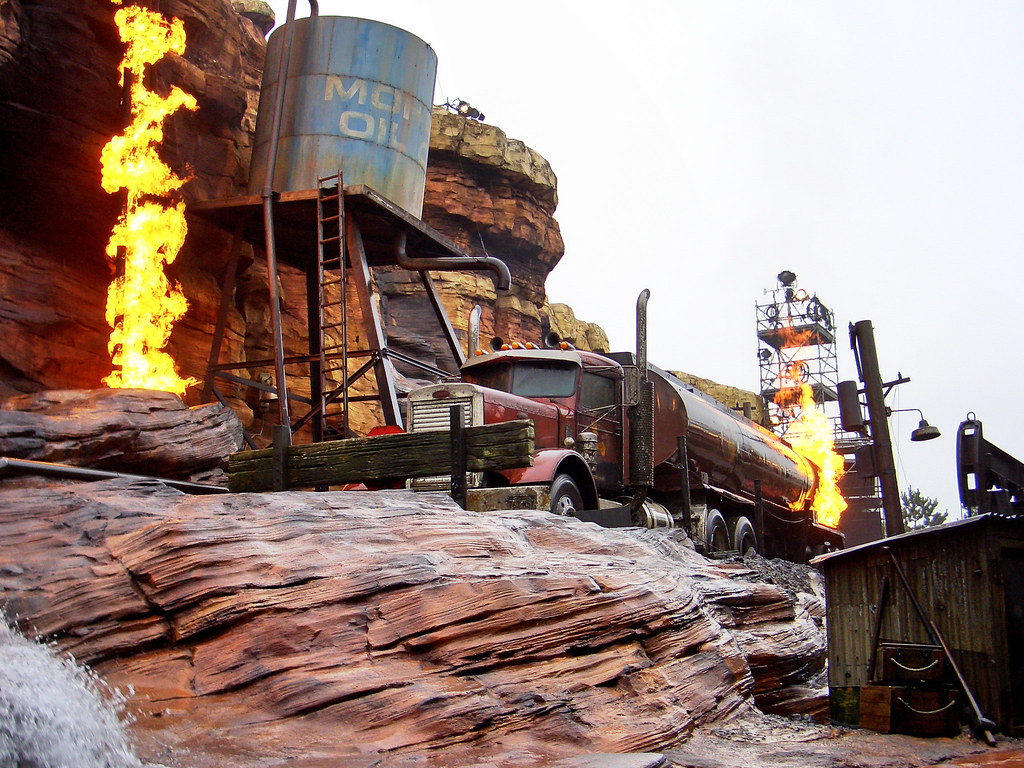
The unforgettable fireball at Catastrophe Canyon. Photo by wwarby, CC BY 2.0, via Flickr.
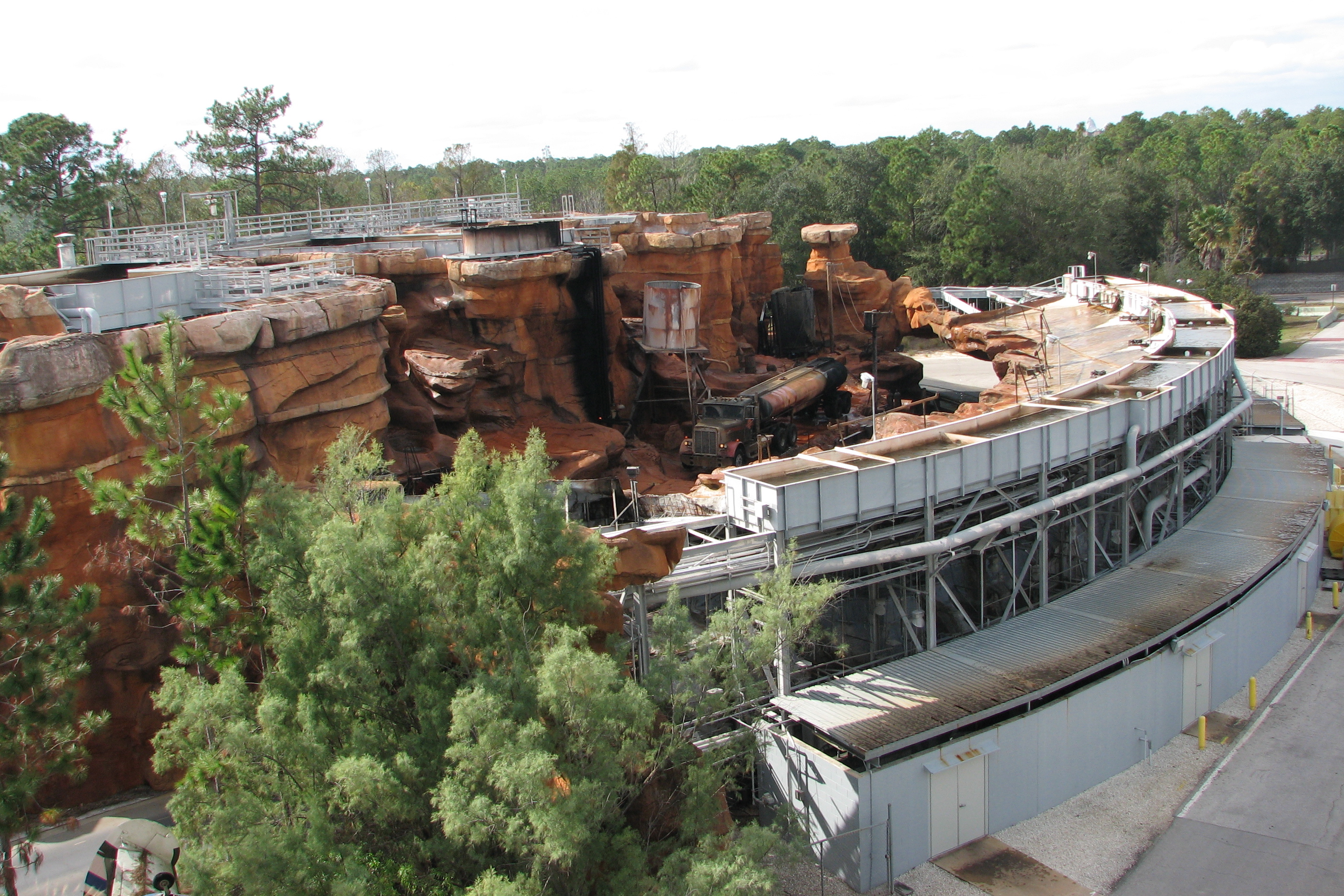
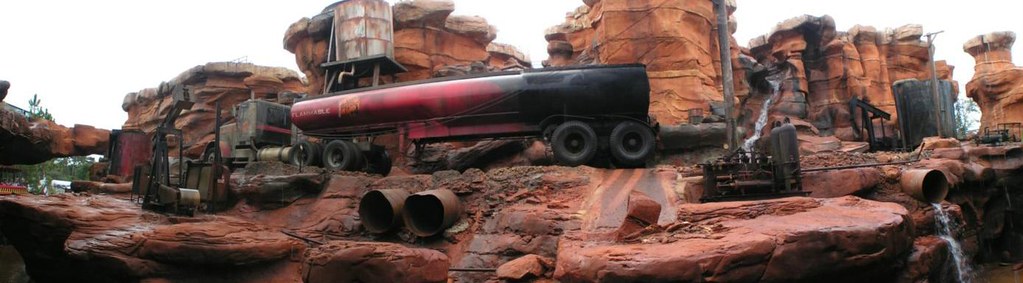
No discussion of the Backlot Tour is complete without Catastrophe Canyon. As the tram rolled into what appeared to be a quiet desert movie set — complete with a fuel tanker truck and rickety buildings — all hell would break loose in the best possible way.
A simulated earthquake shook the ground. Power lines sparked and fell. The fuel truck erupted in a massive fireball that sent waves of heat washing over guests. And just when you caught your breath, a flash flood of water came roaring down the canyon, splashing dangerously close to the tram.
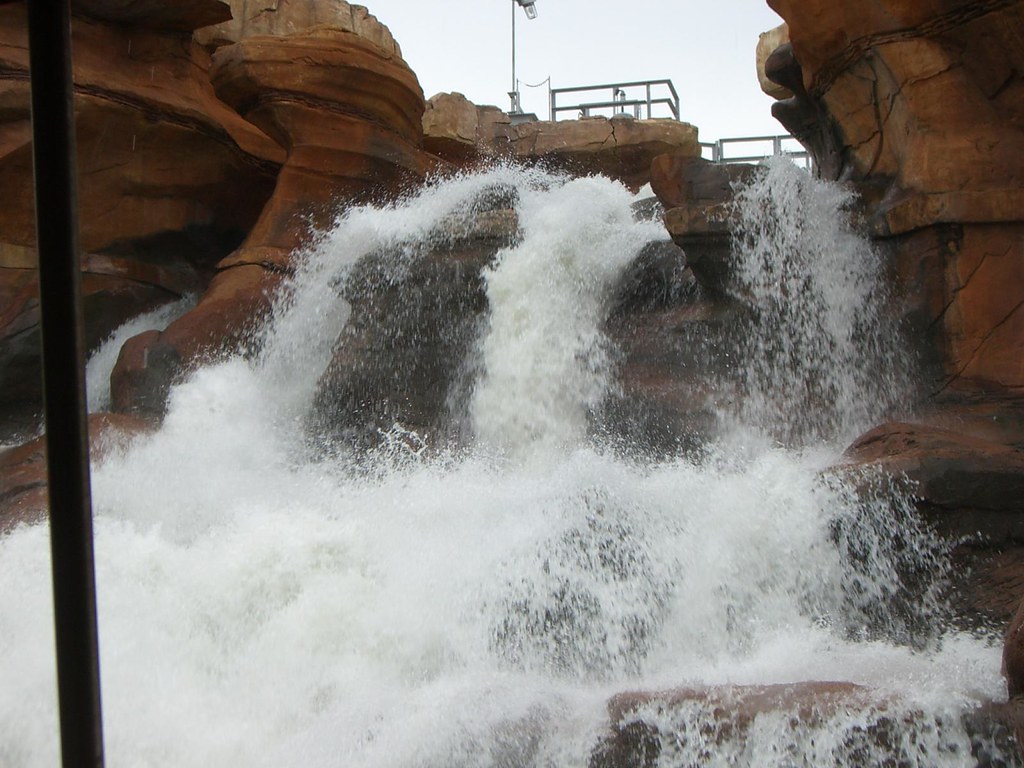
Tram guests experiencing Catastrophe Canyon's spectacular effects. Photo by JeffChristiansen, CC BY-SA 2.0, via Flickr.
Then came the true Disney magic: the tram slowly pulled forward, and you could see the entire set resetting before your eyes — the water draining, the fire suppression systems reloading, everything returning to its starting position. The message was clear: that's how movies are made.
A Real Working Studio
What made the early years of the tour so compelling was that guests weren't just looking at static displays — they were genuinely peeking behind the curtain of an active production facility. The list of productions filmed at Disney-MGM Studios is remarkable:
Feature films including Ernest Saves Christmas (1988, before the park even opened), Passenger 57 (1992), and Instinct (1999).
Television shows like the revived Mickey Mouse Club — the very show where a young Britney Spears, Justin Timberlake, Christina Aguilera, Ryan Gosling, and Keri Russell got their starts. Cast members working the tour reportedly crossed paths with these future megastars regularly on the soundstages.
Other productions ranged from Wheel of Fortune specials and Live! With Regis & Kathie Lee tapings to episodes of Full House and ESPN award shows.
The Earffel Tower
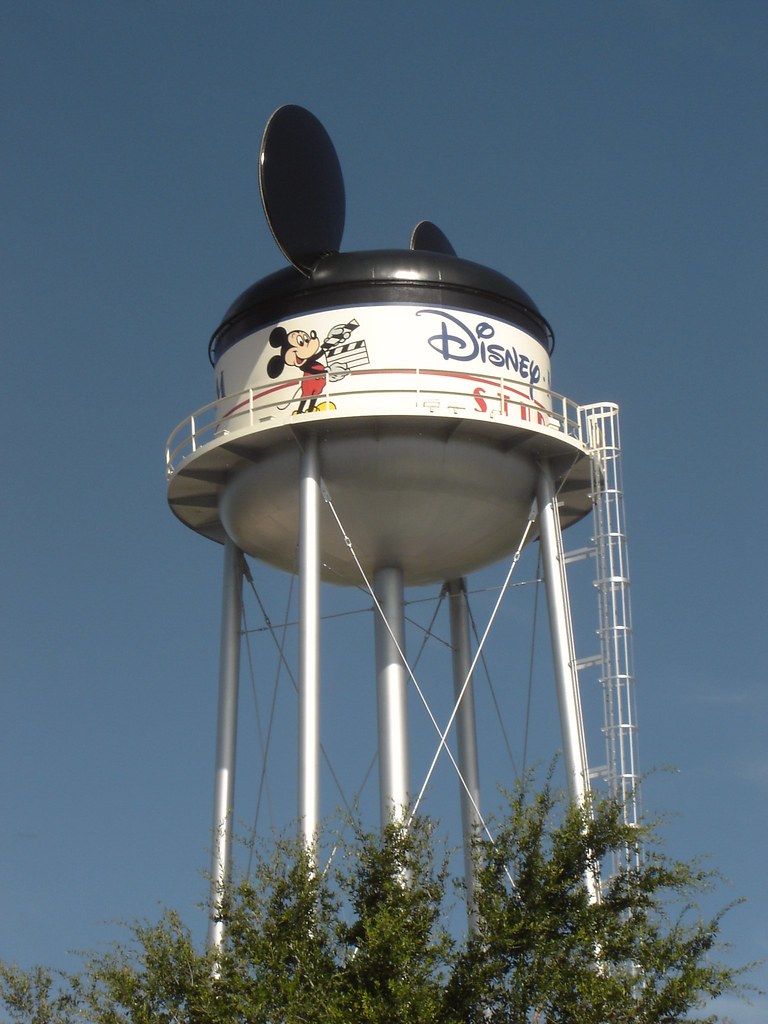
The iconic Earffel Tower — a 130-foot water tower topped with Mickey ears. Photo by nickirp, CC BY-ND 2.0, via Flickr.
One of the most beloved icons visible during the tram tour was the Earffel Tower — a 130-foot structure modeled after the real water tower at Walt Disney Studios in Burbank, California, but topped with a pair of oversized Mickey ears. Fun fact: despite its appearance, it never actually held water. (Real Hollywood water towers existed to douse fires on flammable wooden sets.)
The Earffel Tower served as the park's original icon from 1989 until 2001 and was one of the most photographed landmarks in all of Walt Disney World. The tram tour was the closest guests could get to it. It was removed in April 2016 to make way for Toy Story Land — but a version with Mickey ears still stands at Walt Disney Studios Park in Paris.
How the Tour Evolved
Like all great Disney attractions, the Backlot Tour was constantly changing — though in this case, the changes mostly meant getting smaller as the park grew around it.
1989-1991: Within about two years of opening, the massive two-hour experience was split into two separate attractions — a 30-minute tram ride and a one-hour walking tour. New York Street became the standalone "Streets of America."
Mid-1990s: The tour was rebranded as the "Studio Backlot Tour" and received a new addition — the Water Effects Tank (later themed to Pearl Harbor), where unlucky audience volunteers got absolutely drenched by roughly 1,000 gallons of water. An AFI Villains exhibit was added to the exit.
2003-2005: Residential Street — those beloved TV facades — was demolished to make room for the Lights, Motors, Action! Extreme Stunt Show. The tram route was rerouted and significantly shortened.
2008: Disney-MGM Studios was renamed to Disney's Hollywood Studios, signaling the park's definitive shift away from its "working studio" roots.
2009: The live tram guides — whose personality and humor had been a hallmark of the experience — were replaced with pre-recorded narration.
The Boneyard
Props and vehicles from classic films in the Boneyard. Photo by d4rr3ll, CC BY 2.0, via Flickr.
One of the quieter pleasures of the tour was the Boneyard — named after aircraft boneyards — where retired vehicles and props from famous productions were laid out for guests to admire from the tram. Among the treasures: the Dip Machine from Who Framed Roger Rabbit, ships from the original Star Wars trilogy, motorcycles from Indiana Jones and the Last Crusade, vehicles from The Love Bug and Flight of the Navigator, and Walt Disney's personal Grumman Gulfstream I airplane — known as "The Mouse" (tail number N234MM, where "MM" stood for Mickey Mouse).
The Final Bow: September 27, 2014
On September 20, 2014, Disney announced — with just one week's notice — that the Studio Backlot Tour would close. Seven days later, the trams made their final run. By its last years, the experience had been condensed to about 35 minutes: the water effects pre-show, a shortened tram route through the costuming department, scenic shop, backstage areas, the Boneyard, and Catastrophe Canyon.
It was a fraction of what it had been in 1989 — but Catastrophe Canyon still delivered every single time.
What Rose in Its Place
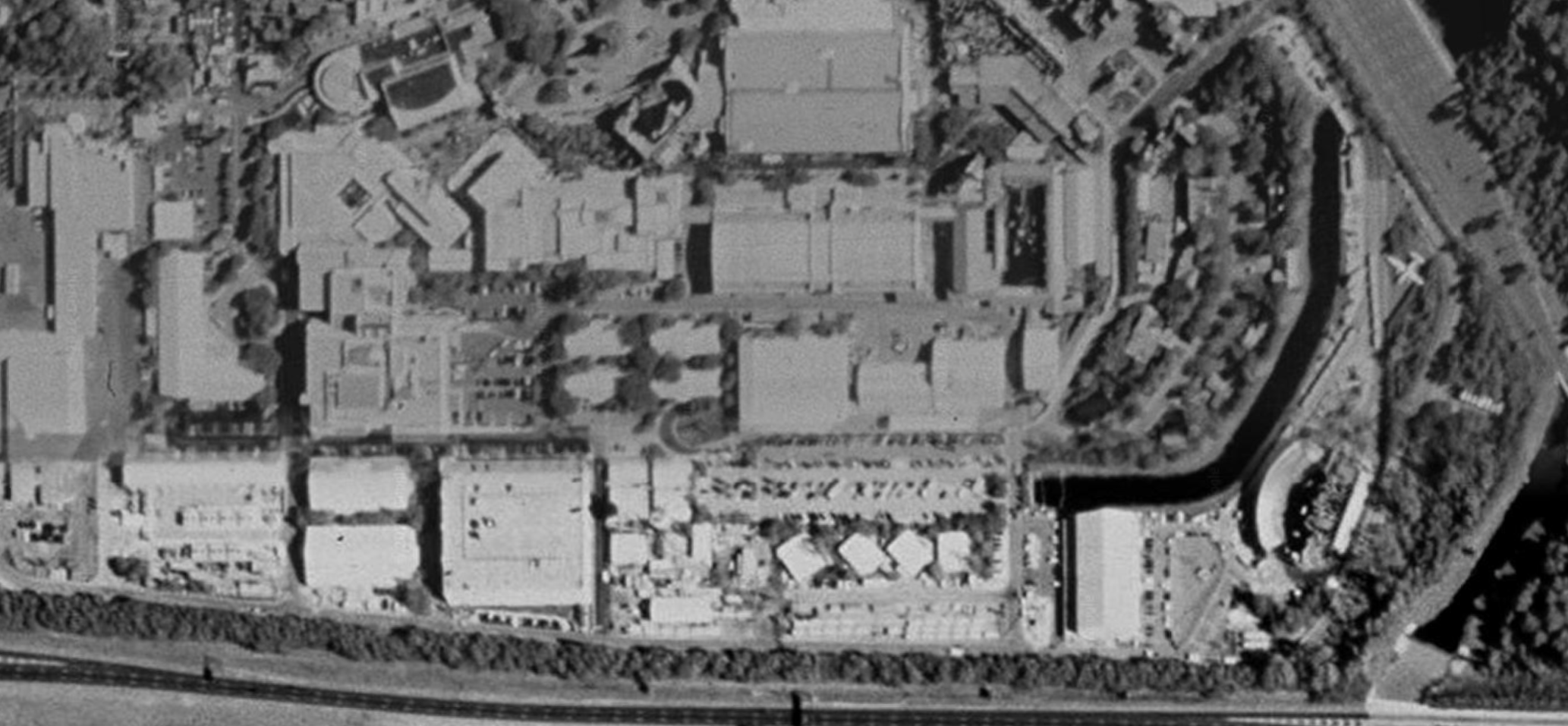
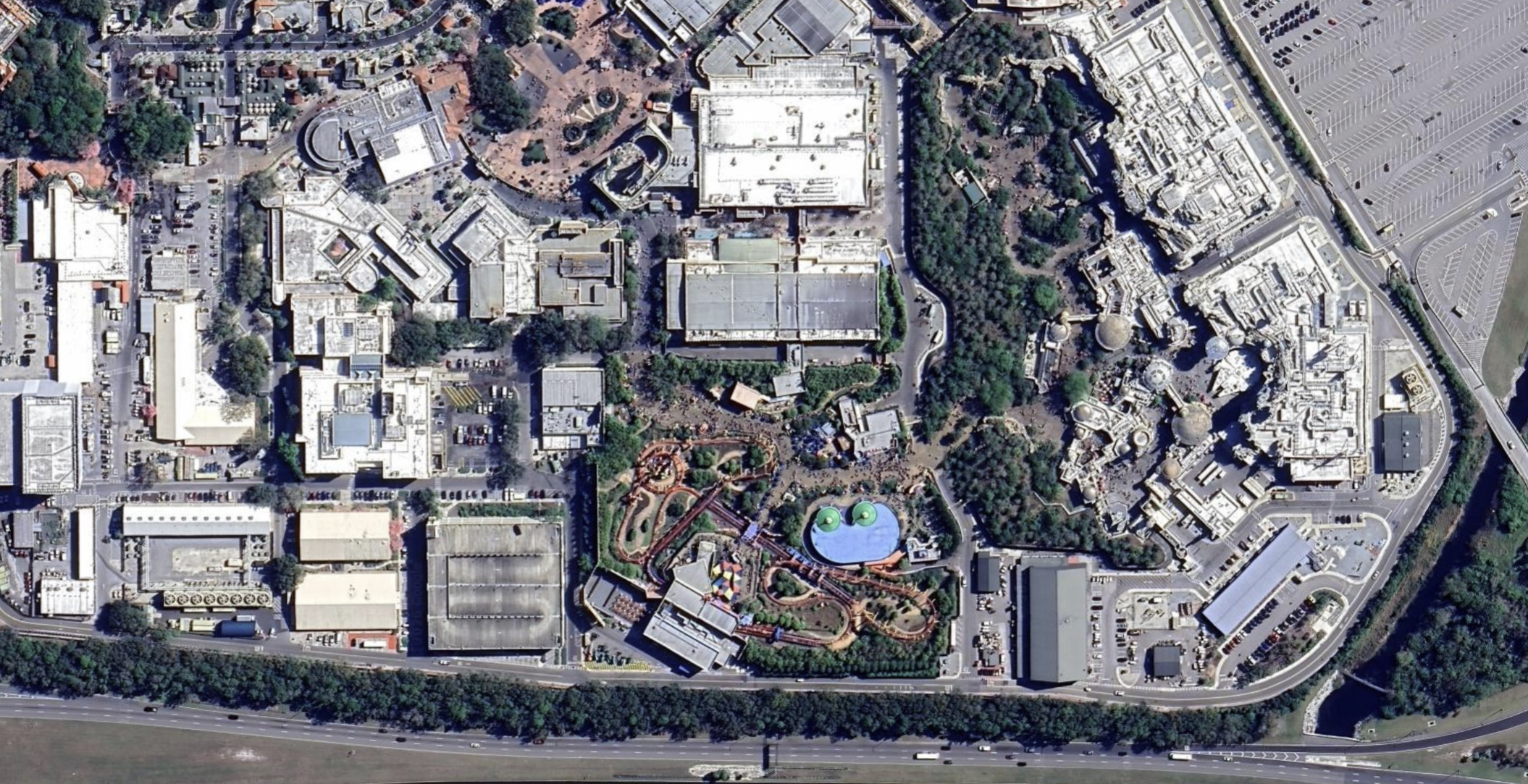
The Backlot Tour's footprint (along with Streets of America and Lights, Motors, Action!) became home to two of the most impressive themed environments Disney has ever built:
Toy Story Land (opened June 30, 2018) — where guests shrink to the size of a toy in Andy's backyard, featuring Slinky Dog Dash and Alien Swirling Saucers.
Star Wars: Galaxy's Edge (opened August 29, 2019) — a fully immersive trip to the planet Batuu, with Millennium Falcon: Smugglers Run and Star Wars: Rise of the Resistance.
It's impossible to argue with the results. Galaxy's Edge alone is one of the most ambitious themed environments ever created, and Rise of the Resistance has a legitimate claim to being the greatest theme park attraction ever built. The park's transformation has been nothing short of extraordinary.
Remnants That Live On
While the Backlot Tour is gone, a few echoes remain for those who know where to look:
Star Wars Launch Bay is housed in the very same building where guests originally boarded the Backstage Studio Tour trams in 1989. If you look carefully, you can spot the large opening at the rear of the building — that was the original tram entrance.
Two pieces of mining equipment from Catastrophe Canyon were salvaged and now live at the Boulder Ridge Cove Pool area at Disney's Wilderness Lodge resort.
Walt Disney's airplane "The Mouse" was removed, restored, displayed at the 2022 D23 Expo, and now resides at the Palm Springs Air Museum in California.
Celebrating the Past, Embracing the Future
The story of the Backlot Tour is really the story of Hollywood Studios itself — a park that has constantly reinvented itself, shedding one identity to embrace another. What started as a place that showed you how movies were made has become a place that makes you feel like you're living inside one.
That philosophical shift — from pulling back the curtain to full immersion — is one of the most significant evolutions in theme park history. And it all started with a two-hour tram ride through a working studio lot in 1989.
So here's to the Backlot Tour: to Catastrophe Canyon's fireballs, to the Boneyard's treasures, to Residential Street's famous facades, and to the Earffel Tower watching over it all. It was a one-of-a-kind experience that gave millions of guests a genuine glimpse behind the magic — and the park it helped build has never been more magical than it is today.